
A quarry is returned to nature after end of operations
-
1 Former Bosenberg cement plant with old...
-
2 Quarry II at the Beckum road with the first...
-
3 Static water development aim
-
4 Plants used
-
5 State of development in early 2009
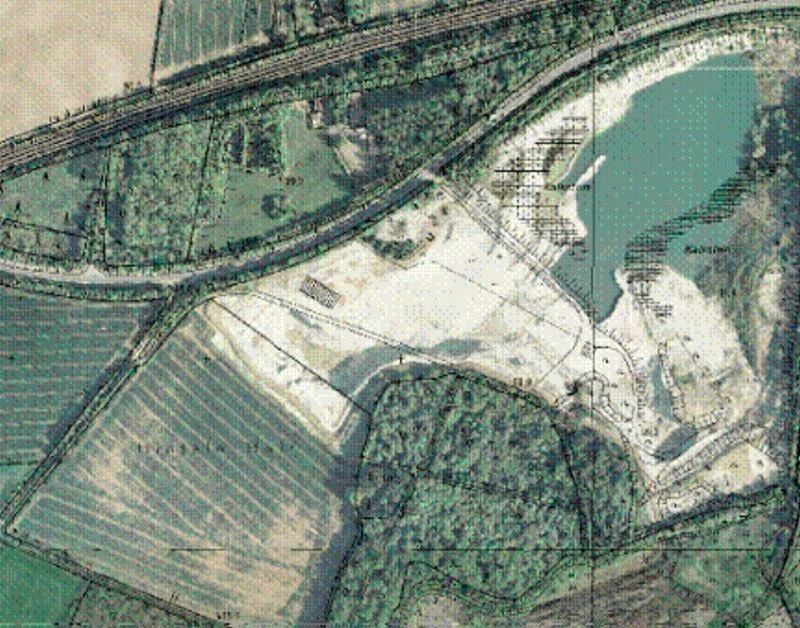
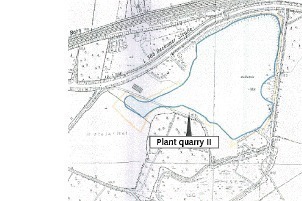
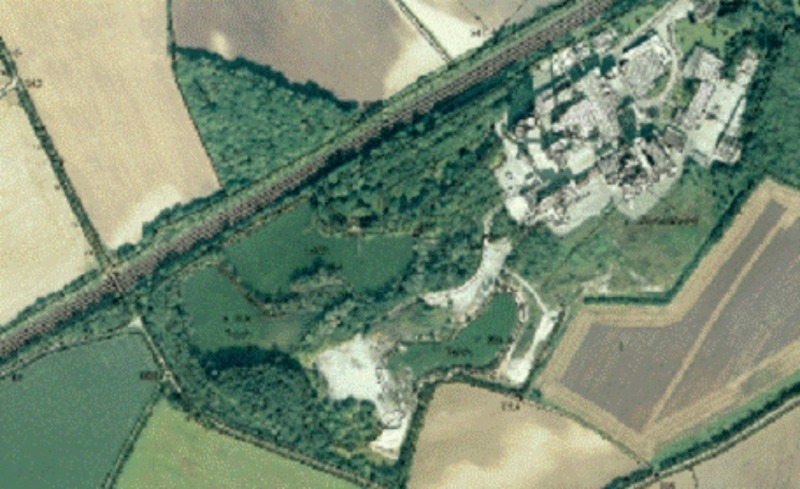
Unlike almost any other region in Germany the Warendorf region is characterized by a large number of cement companies that in some cases have very long histories. However, not all plants are operated until their authorized deposits have been exhausted, which means that in this case there is the problem of what to do with the partially exploited limestone quarries. One such example is the former quarry of the Bosenburg cement plant. Bücker-Flürenbrock, the family company cement plant in Bosenberg (Fig. 1), operated for over 75 years in Ahlen-Vorhelm (Fig. 2). In 2007, two years after the sale to HeidelbergCement AG, it was closed because of capacity adjustments due to market forces.
HeidelbergCement operates another production site, the Ennigerloh cement plant, only 10 km away. After the Bosenburg plant had been shut down it was therefore considered whether the associated quarry should exploited further by the Ennigerloh cement plant or filled in and/or returned to nature. HeidelbergCement finally decided against further excavation and in favour of renaturalising the quarry site. The return of the 38 hectare site to nature is also regarded as a precondition for the impending extension of the quarry at Ennigerloh as it will very rapidly produce a biotope system that will offer new habitats when the new quarry area is being excavated.
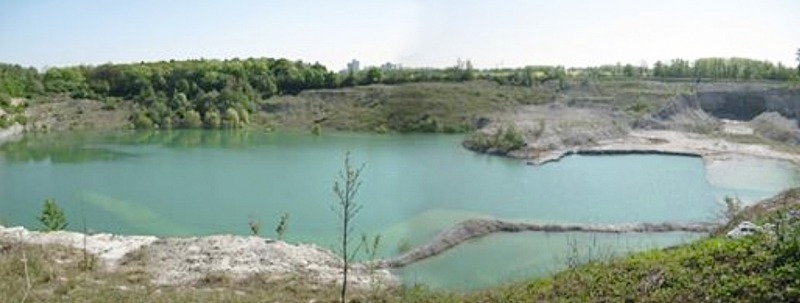
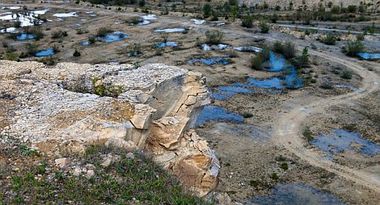
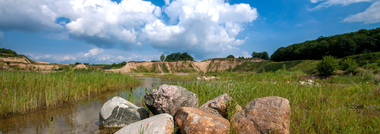
After dismantling the remaining plant at the former Bosenberg cement works HeidelbergCement has undertaken various measures to stabilize the subsoil and protective walls. After discontinuing the artificial dewatering of the groundwater by pumps it was clear that after about 15 to 20 years the incoming ground water and the rainwater will form an area of static water (Fig. 3) that, because of its protected and confined nature, will resemble a biotope.
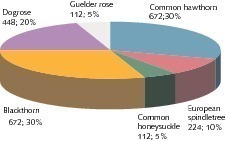
In agreement with the supervisory authorities various sloping banks were modelled on a scale of 1:10 during the profiling of the static water zone. A protective wall was built on the land in the western and southern area of the quarry boundary and a very dense hedge was planted of native woody plants that were suitable for the location. In some places the steep banks were enhanced by benches and some protective walls had to be moved. The planting was laid out as a 4-row hedge in which staggered planting in rows of 1 to 6 woody plants of the same type with an interval between the plant rows of about 1.5 m was chosen (Fig. 4). All the other areas are being left to natural further development for which an initial three-year development growth care plan was agreed. Only after about 5 years will a check be made to see whether the intended planting measures have been successful or whether anything is inhibiting the natural development.
HeidelbergCement AG and the supervisory authorities will make an annual visual check of the progress (Fig. 5). The modelled area of about 36 hectares is immediately next to the European “Vinckenwald/Düppe” fauna-flora habitat area in the Ahlen landscape plan that is looked after by nature conservation representatives in the context of biological maintenance strategies. The ownership of the area of the renatured quarry has been transferred to the town of Ennigerloh.