
Carpatcement: Investment in modern bag filter technology
The environmental situation in Romania is characterized by contrasts. On the one hand are the sparsely populated landscapes and original mountain ranges, on the other hand, the air, water and soil pollution legacy of the Ceausescu era has left its mark. With the establishment of the Environment Ministry and the entry into the EU, the environmental policy today receives increased attention [1]. The same applies to the cement plant in Bicaz that was built in the 1950s.
In 1998, HeidelbergCement entered the Romanian market with the acquisition of a majority stake in the cement plant Moldocim Bicaz. In the years 2000 and 2002, the plants Casial Deva and Romcif Fieni were added, which are joined together as the Carpatcement Holding. Since its activity on the Romanian market, the German group has already invested more than 150 million € in Romania, of which 9.5 million € were streamed into the environment (2002). In Bicaz 55 million € alone were invested for the modernization and enlargement of kiln line 2. Firstly, the investment is part of a program to double production capacity, which will be completed in 2011. Secondly, it serves a sustainable cement production, which aims at the conserving of natural resources and the reduction of CO2 emissions by 15 % compared to the level of 1990 [2]. To achieve this goal, the production processes in Bicaz are also constantly optimised and the use of secondary raw materials and fuels increased.
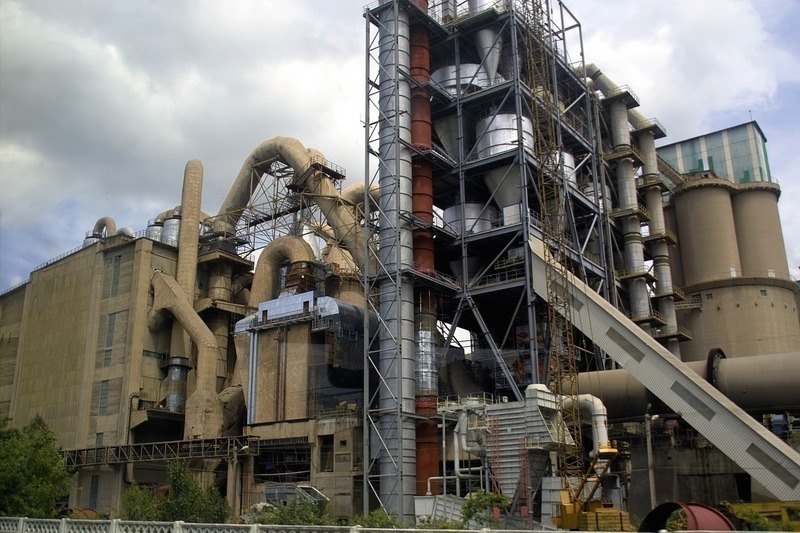
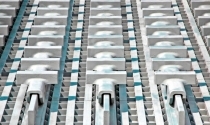
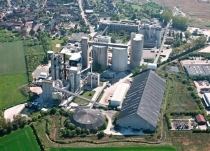
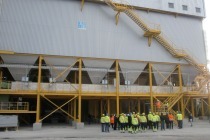
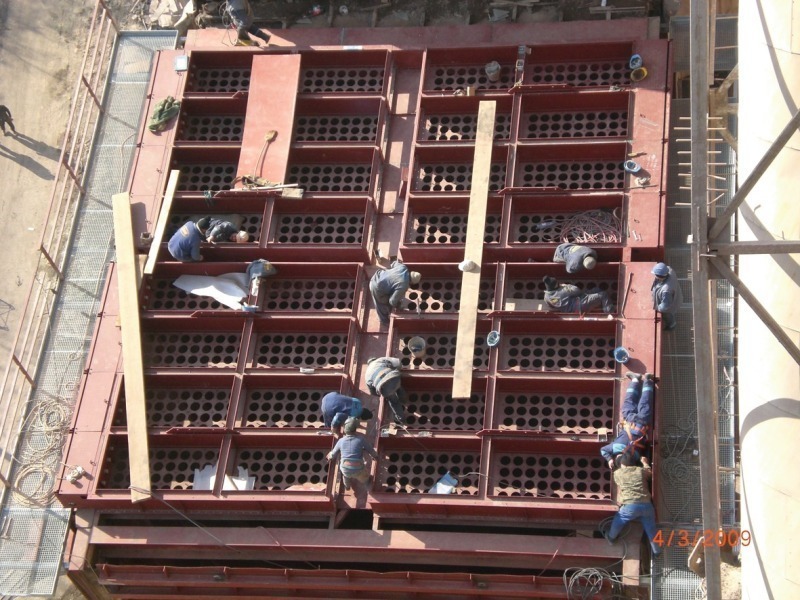
In 2008, negotiations were launched between HeidelbergCement and Intensiv-Filter for the restoration of the kiln line 2 to convert the existing electrostatic precipitator (Fig. 1) and to reactivate the plant in Bicaz (Fig. 2). The order placed with the filtration plant manufacturer included engineering, supply of special parts, supervision of erection and commissioning of two bag filters for the dust removal from the rotary kiln and the raw mill and the evaporation cooler and various secondary dust collectors. In addition, the condition of the cement works was an unusual challenge for the operator as well as for the plant manufacturer. A site inspection revealed the poor condition, particularly of the evaporation cooler. The corrosion had progressed considerably during the years of downtime. Therefore, in addition to the retrofit of the filter, it was necessary to implement a partial redesign of the overall system. An essential component of the modernisation and restoration project was the flow improvements within the evaporation cooler and bag filters. Using flow optimisation, the design parameters, which impact directly or indirectly on the flow field, had to be chosen so that the most possible uniform velocity profile had be defined.
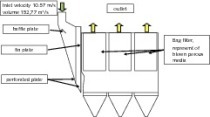
The basic objectives of flow optimisation are to achieve the greatest possible cost use effect by different structural measures and positioning of deflector and fin plates. The flow optimisation of the raw gas channel in the bag filter was determined by simulations of different deflector and fin plate configurations. The final decision was made for deflector plates before the filter inlet and within the duct.
The simulation results of the evaporation cooler made clear that changes were necessary in the ducts of the elbow. The inflow into the evaporation cooler was optimised with deflectors so that the gas flows centre-fed into the upper cone of the instrument. The flow is even both along and through the installed perforated fin plates. The main flow lies after the water injection solidly in the middle of the evaporation cooler [3]. Due to the flow optimisation an improved cooling with a higher efficiency and a reduction of the flow speeds occurs in the area of the housing wall. As a result, signs of wear can be reduced substantially for the future.
Besides extending the production capacity and the input of secondary fuel, the emissions from > 50 mg/m3 with the electrostatic precipitator were also reduced to clearly under < 10 mg/m3 by investments in the modern bag filter technology and enlargement of the Bicaz plant. Since comissioning , the filtering installation has been operated with an extremely low differential pressure of less than 600 Pa. Also during the coming years cement manufacturers will significantly reduce their dust emissions by the application of modern bag filters.


1 Retrofit
2 Present situation