

Industrial demonstration of low-carbon supplementary cementitious materials prepared via CO2-mineralization of steel slag
Addressing global climate change and achieving China’s “Dual Carbon” goals represent pivotal historical imperatives for the current building materials industry. As major carbon emitters, the green and low-carbon transition of the cement and concrete sectors is increasingly urgent. Traditional carbon capture, utilization, and storage (CCUS) technologies universally encounter application bottlenecks, such as prohibitive costs and limited sequestration pathways. Utilizing bulk industrial solid wastes, such as steel slag, to directly capture and mineralize CO2 from industrial flue gas is regarded as a breakthrough strategy that simultaneously achieves low-cost carbon mitigation and the high-value utilization of solid waste. However, chronically constrained by “bottleneck” challenges—such as sluggish reaction efficiencies under low CO2 concentrations and the volume instability of the solid wastes—this technology has largely remained confined to laboratory-scale mechanistic exploration. Consequently, large-scale, safe, and high-value industrial applications have been elusive.
Bridging the gap between fundamental theory and engineering demonstration to realize the industrialization of carbon mineralization technology is the core prerequisite for truly unlocking the emission reduction potential of CCUS. Targeting this critical industrial pain point, our research team, led by Professor Liwu Mo at Nanjing Tech University, has a long-standing commitment to the industrial practice of low-carbon cement and concrete, solid waste valorization, and the low-cost capture and utilization of CO2. Centered on the core theme of “CO2 mineralization of industrial solid wastes and their large-scale application in building materials,” the team has successfully established the complete industrial translation chain: from elucidating fundamental mechanisms and developing key catalytic technologies to the integration of industrial-grade equipment and processes. Compared with previous studies that mainly focused on laboratory-scale carbonation using high-purity CO2 or simulated gas, this work demonstrates the continuous industrial production of CO2-mineralized steel slag SCMs using real cement kiln flue gas.
Building upon the team’s foundational research (Figure 1), the world’s first production line dedicated to “capturing cement kiln flue gas CO2 using steel slag to manufacture CO2-mineralized supplementary cementitious materials (SCMs) and low-carbon cement” was officially commissioned in November 2022 at China United Cement Corporation (Jiyuan). With a total investment approaching 100 million RMB, the first phase of this industrial demonstration project is capable of directly capturing 16,000 t of CO2 annually from cement kiln flue gas. Simultaneously, it valorizes steel slag to yield 300,000 t of carbon-fixation SCMs and 300,000 t of high-performance composite admixtures, achieving an overarching carbon mitigation scale of up to 250,000 t per year. The commissioning of this landmark facility fills a global void in the industrialized utilization of steel slag for capturing cement kiln CO2 to produce carbon-storing building materials. It signifies that CCU technologies and their industrial deployment within China’s cement sector have ascended to a new echelon. This achievement successfully dismantles the engineering and technical barriers that have historically restricted the large-scale, safe, and high-value application of steel slag in cement and concrete, thereby establishing a highly economically viable industrial paradigm for the large-scale consumption of bulk industrial solid wastes.
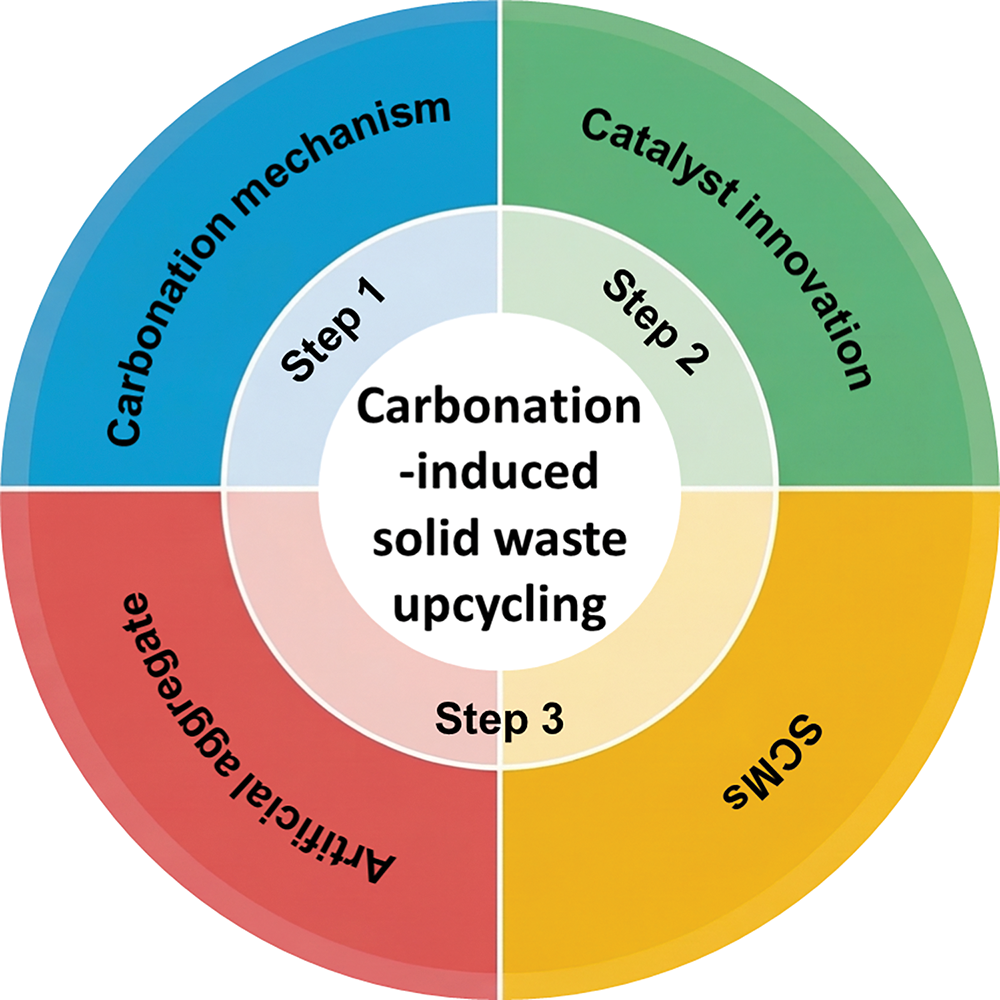
Figure 1 CO2-mineralization of industrial solid waste
2 Production line of CO2-mineralized steel slag SCMs
Figure 2 shows the operational flowchart of the production line for CO2-mineralized steel slag SCMs, and the physical image of the production line is shown in Figure 3. The manufacturing process of these steel slag SCMs primarily encompasses stages such as raw material preparation, mechanical mixing, and the subsequent carbonation reaction.
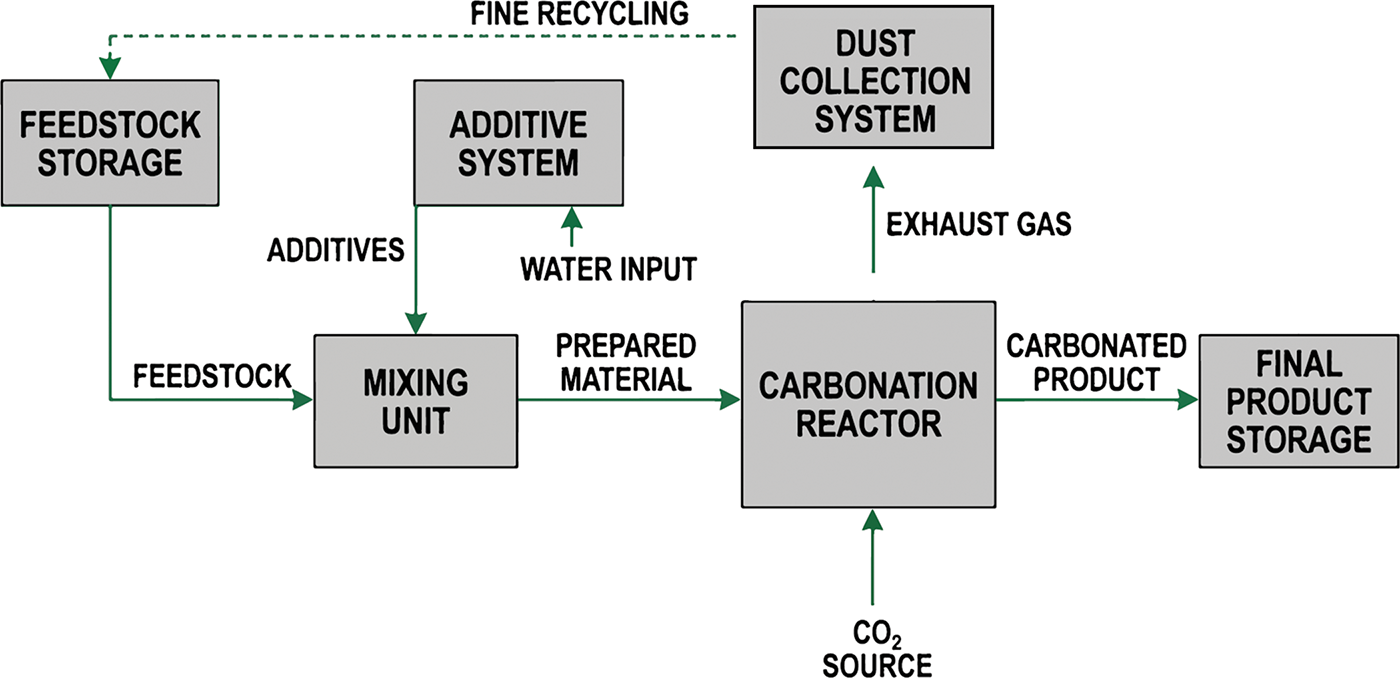
Figure 2 Production process of CO2-mineralized steel slag SCMs
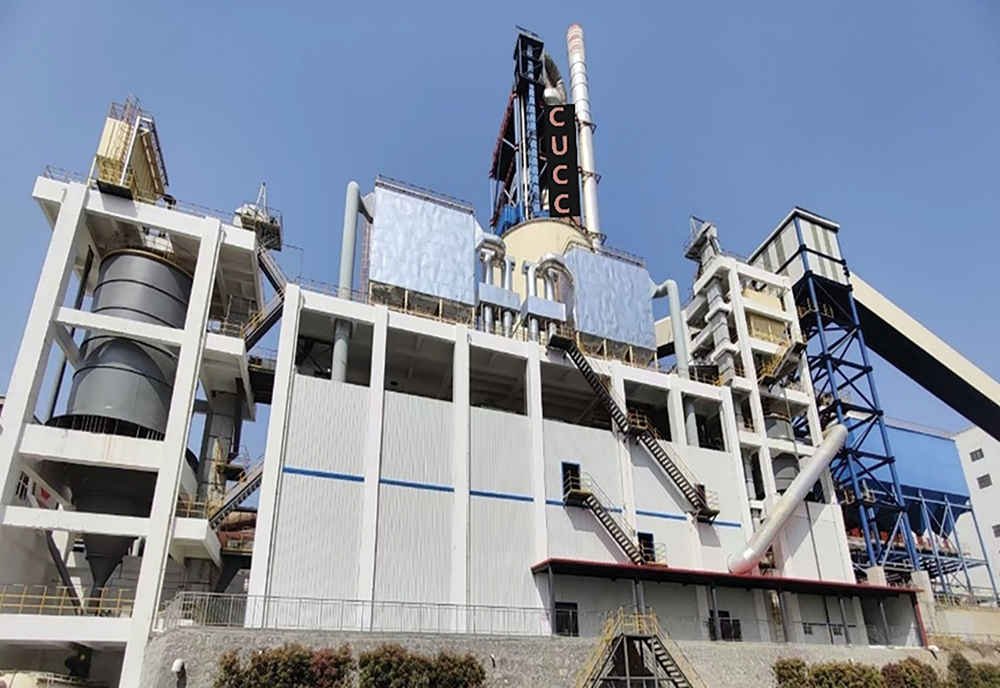
Figure 3 Physical image of the production line of CO2-mineralized steel slag SCMs at China United Cement Co., Ltd.
Initially, the raw steel slag feedstock is held in a primary storage system. During continuous operation, the slag powder is discharged at a controlled, quantitative rate into a central mixing unit. Simultaneously, water or a tailored additive solution is introduced into the mixer to achieve a predetermined liquid-to-solid ratio. The materials undergo mechanical agitation until a uniformly wetted, homogenous steel slag mixture is produced.
Following the preparation stage, the wetted slag is transported to the carbonation reactor. A CO2-rich industrial flue gas is continuously introduced into the reactor to initiate the carbonation process. The CO2 concentration in the cement kiln flue gas generally fluctuated within 15.0–24.0 vol.%. Gas flow dynamics and velocity are regulated through generalized draft control systems, which correspondingly govern the residence time of the solid material within the reactor, thereby optimizing the carbonation environment. To mitigate material loss and environmental impact, the reactor system is equipped with a particulate collection unit. Compared with conventional fixed-bed reactors, the dynamic carbonation reactor continuously renews the gas-solid contact interface, thereby reducing gas channeling during carbonation. In addition, the residual heat of cement kiln flue gas promoted moisture removal during carbonation. As a result, the moisture content of the carbonated steel slag SCMs generally remained below 1.00 wt.%, avoiding an additional drying step and reducing the energy demand of the overall process.
Fine steel slag particulates captured during the reaction phase are recycled back into the production loop to ensure maximum material efficiency. Throughout the process, key operational variables-such as overall moisture input, inlet gas temperature, and additive concentration—are monitored and adjusted. The modulation of these generalized parameters governs the overall degree of carbonation, ultimately determining the final material properties and performance of the CO2-mineralized steel slag SCMs. After the production system reached stable operation for 30 min, samples were collected from the inlet and outlet of the carbonation reactor. Samples were collected every 8–10 min, and the average values of repeated measurements were used for analysis.
Figure 4 shows the macroscopic appearance of CO2-mineralized steel slag SCMs. Notably, owing to the thermal impact of the high-temperature flue gas stream, the CO2-mineralized steel slag SCMs exhibits a relatively low post-carbonation moisture content, generally remaining below 1.00 wt.%. This essentially eliminates the necessity for any subsequent drying procedures.
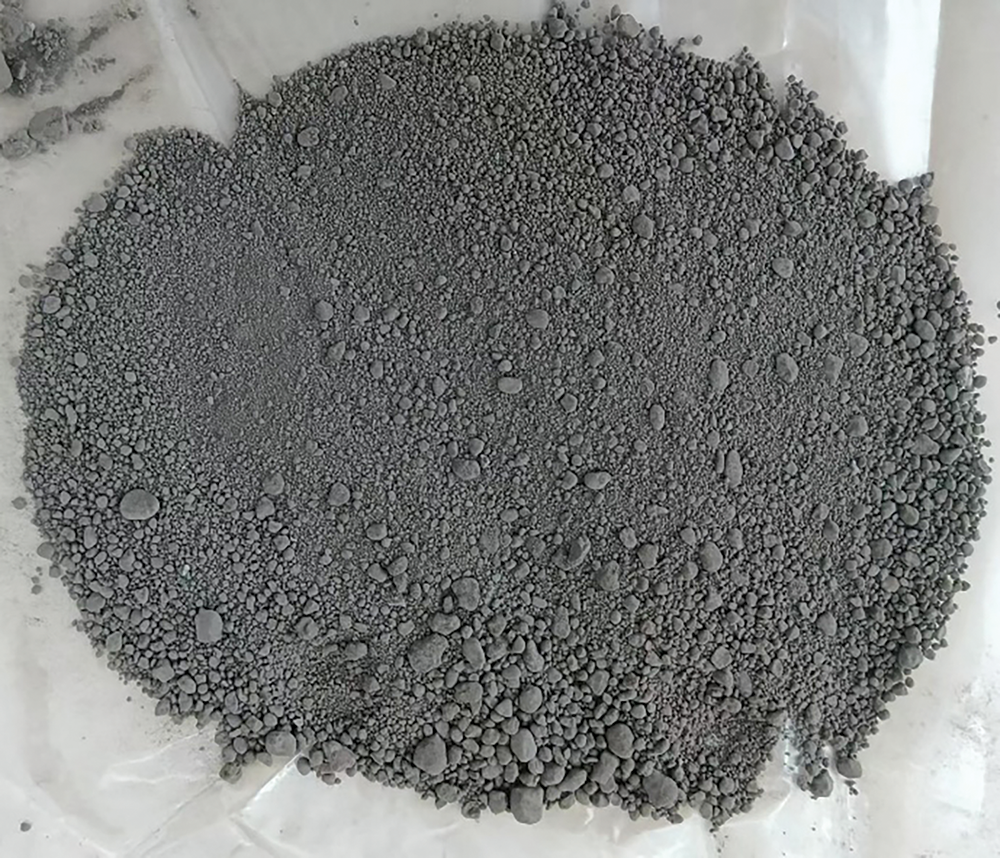
Figure 4 Macroscopic appearance of CO2-mineralized steel slag SCMs
3 Characteristics of CO2-mineralized steel slag SCMs
Figure 5a presents the XRD patterns of steel slag SCMs. Following carbonation, the intensity of the C2S diffraction peaks diminished, concomitant with the emergence of pronounced CaCO3 diffraction peaks. This demonstrates that the steel slag maintains a robust carbon-fixation capacity under industrial operational conditions. Figure 5b shows the TG curves of steel slag SCMs. In the TG analysis, the mass loss in the range of 600–750°C was assigned to CaCO3 decomposition and used to calculate the CO2 uptake. Calculations derived from the TG data indicate that the maximum CO2 uptake of the steel slag reaches up to 3.98%. Upon increasing the liquid spraying dosage from 8 wt.% to 10 wt.%, the CO2 uptake of sample JY-7 was enhanced by 47.96% compared to that of JY-4. The incorporation of chemical admixtures also significantly elevates the CO2 uptake of the steel slag. With the addition of 0.05 wt.% admixture, the CO2 uptake of JY-5 increased by 18.96% relative to JY-4. Figure 5c shows SEM images of the CO2-mineralized steel slag. As observed, a profusion of micro-sized CaCO3 precipitates is generated on the surfaces of the calcium silicate particles. The soundness of the steel slag was evaluated in accordance with the GB/T 750-1992 standard. The autoclave expansion rates of the pastes, formulated by substituting 30 wt.% of the cement with steel slag, are illustrated in Figure 5d. The autoclave expansion rate of the paste incorporating raw steel slag exceeded 0.30%, indicating that raw steel slag is unsuitable for direct application as an SCMs. Conversely, the paste containing CO2-mineralized steel slag exhibited a dramatic reduction in autoclave expansion, confirming that the carbonation process effectively enhances the volume stability of the steel slag.
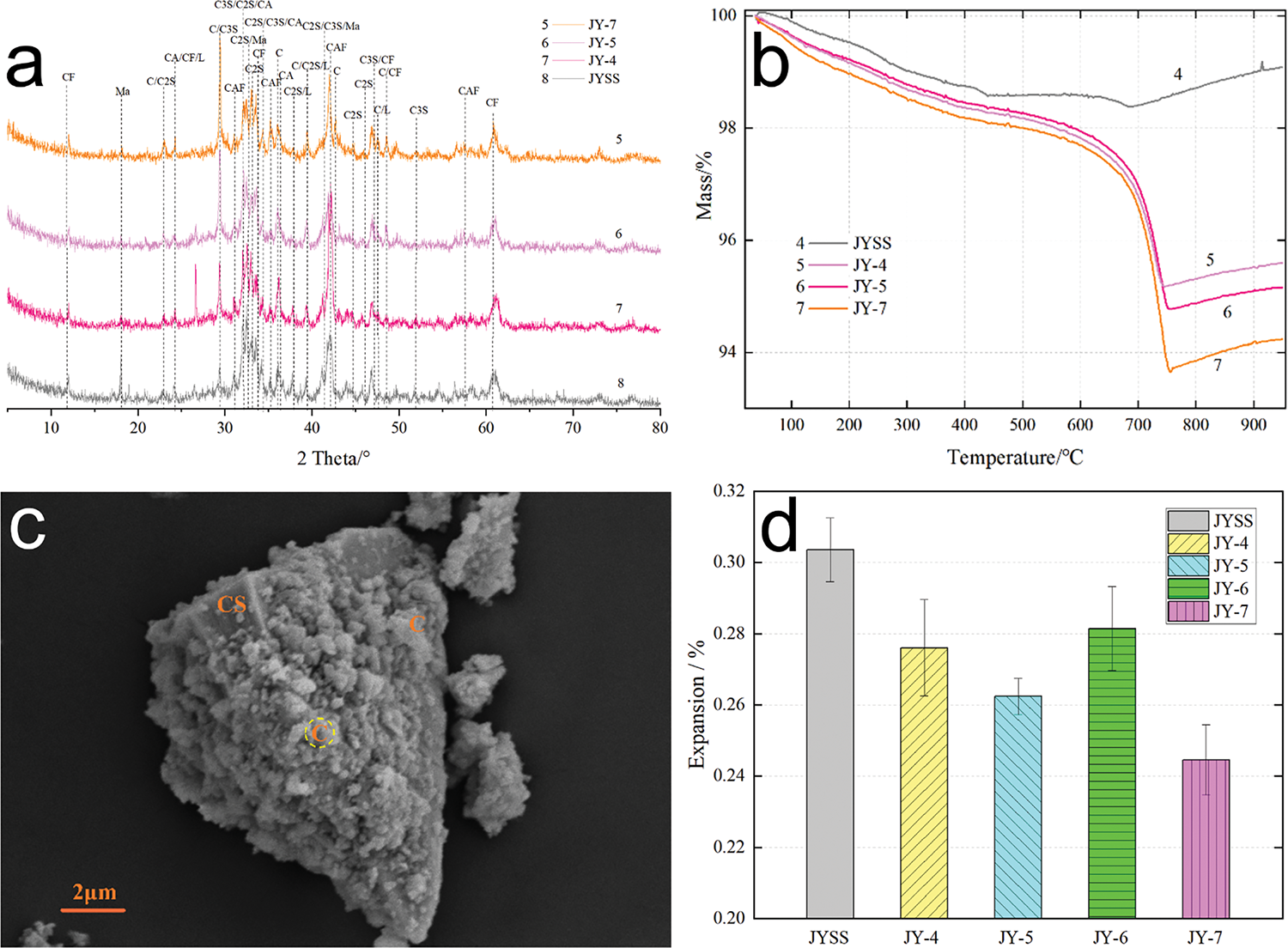
Figure 5 Characteristics of CO2-mineralized steel slag SCMs: (a) mineral compositions, (b) thermogravimetric, (c) micro morphology, (d) soundness
To further evaluate the engineering applicability of the CO2-mineralized steel slag SCMs, cement mortars were prepared by replacing 30 wt.% of cement with raw or carbonated JC steel slag SCMs. As shown in Figure 6, the incorporation of raw JC steel slag reduced the compressive strength of cement mortar at all ages, indicating its relatively low activity. After carbonation, the compressive strength of the mortars was improved. These results indicate that industrial carbonation can improve the activity of steel slag SCMs and enhance their practical applicability in cement-based materials.
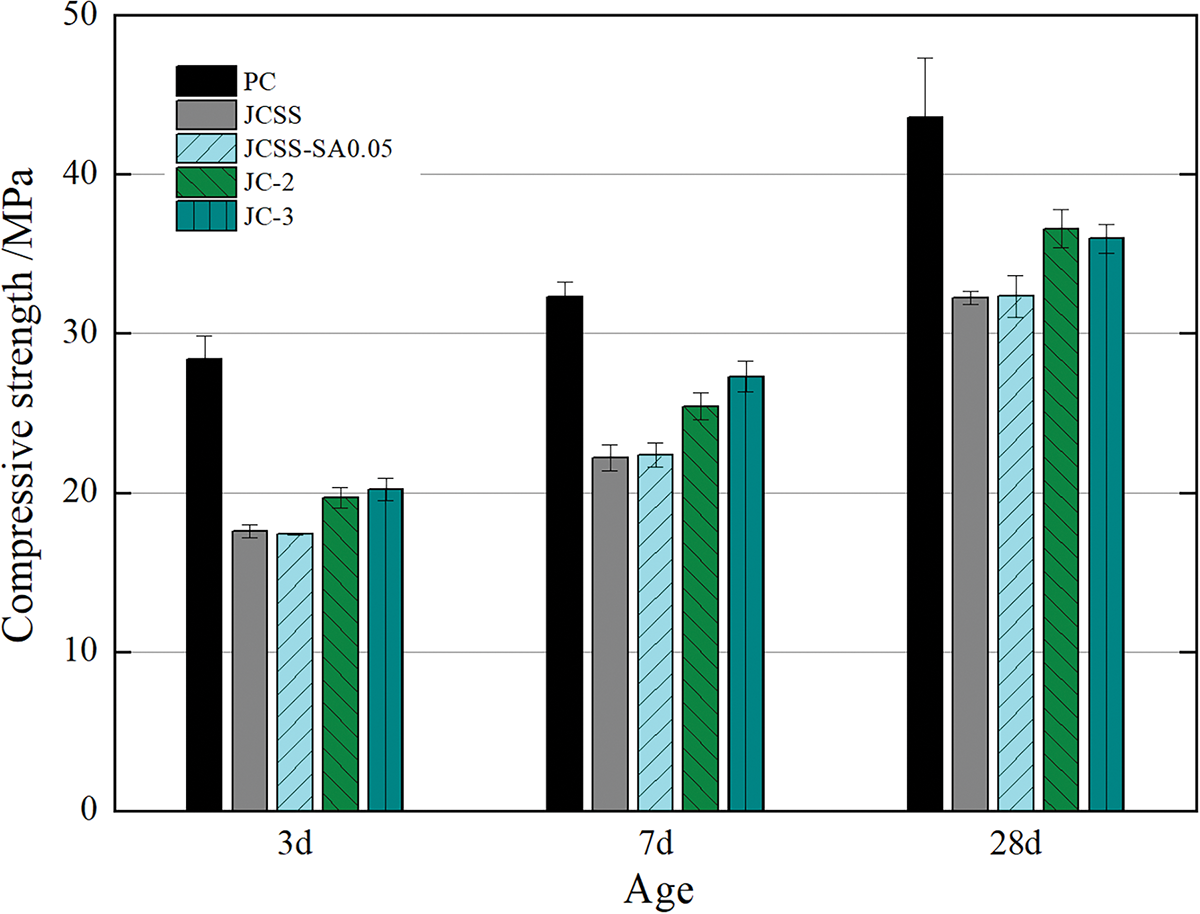
Figure 6 Compressive strengths of cement mortars with JC steel slag replacing 30 wt.% of cement
Addressing the urgent imperative for decarbonization within the building materials sector, this study presents the successful industrial scale-up of direct CO2 mineralization utilizing steel slag. Overcoming the traditional bottleneck of limiting this technology to the laboratory, we report on the world’s first industrial production line dedicated to manufacturing CO2-mineralized SCMs using cement kiln flue gas. The integrated process employs a dynamic carbonation reactor that directly utilizes industrial flue gas (15.0–24.0 vol.% CO2), achieving a maximum CO2 uptake of 3.98% in the steel slag without requiring subsequent drying procedures. Optimization of process parameters, including liquid spraying dosage and chemical admixtures, significantly enhances carbonation efficiency. Microstructural and thermal analyses confirm the precipitation of micro-sized CaCO3 on the calcium silicate particles. Crucially, standard autoclave expansion tests demonstrate that this carbonation process effectively resolves the inherent soundness issues of raw steel slag, transforming it into a volumetrically stable SCM. With an overarching annual carbon mitigation scale of 250,000 t, this milestone project dismantles existing engineering barriers, providing a highly economically viable paradigm for the simultaneous large-scale valorization of industrial solid waste and the low-cost capture of industrial CO2.
 |
Copyright © 2026 The Author. Published by Tech Science Press. This work is licensed under a Creative Commons Attribution 4.0 International License, which permits unrestricted use, distribution, and reproduction in any medium, provided the original work is properly cited. |