
Simulation of lime calcination in PFR kilns – Influence of source and size of limestone
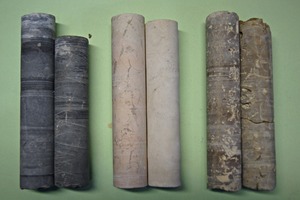
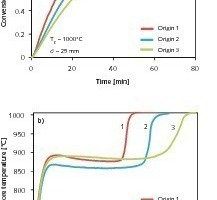
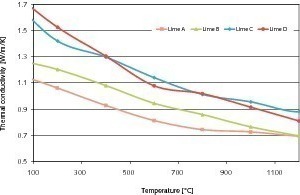
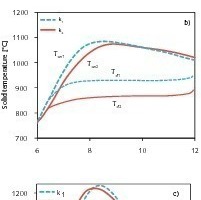
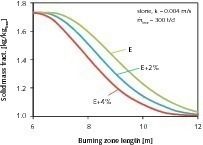
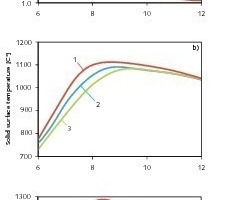
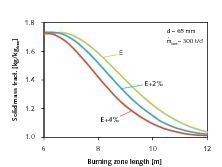
Besides the influence of energy consumption and throughput, the origin and the particle size of the limestone during calcination in the PFR shaft kiln are important.

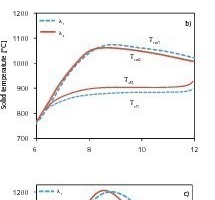
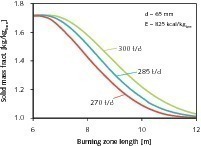
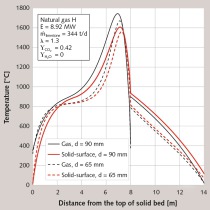
The previous article presented a one-­dimensional mathematical model to describe and simulate the lime calcination process in a PFR lime shaft kiln [1]. The model was used to calculate the core/surface temperatures of the solid (limestone lime) particles, the gas temperature, the residual CO2, the pressure drop along the bed height and the local wall heat loss. The effects of two operating parameters, the energy input and the kiln throughput, were investigated.

1 Introduction

Lime burning is a complex process due to the variety of parameters which exert influences on the process. In principle,...

Related articles:

Issue 10/2015 OTTO VON GUERICKE UNIVERSITY MAGDEBURG

Simulation of limestone calcination in ­normal shaft kilns – Part 2: Influence of process parameters

For normal shaft kilns it is described how the axial profiles of the surface and core temperature of the stones, their decomposition and the gas...

more
Issue 5/2016 EESAC SAS DUINGT/FRANCE

Understanding the process conditions in a parallel flow regenerative kiln

A lime manufacturer operates a 300 tons per day Parallel Flow Regenerative Kiln (PFRK), fired with natural gas. The kiln is fed with 40-80 mm limestone, but in order to maximize the use of the quarry reserve, the company wished to explore the possibility to feed the kiln with smaller and coarser particle size distribution. ...

more
Issue 1/2021 MAERZ OFENBAU AG

New and innovative Maerz PFR lime kiln for Kalkfabrik Netstal in Switzerland

Maerz Ofenbau AG built a new PFR lime kiln with a direct cross-over channel for the production of quicklime with a very low residual CO2 content and very high reactivity in Kalkfabrik...

more
×