

Is Cement facing a talent crisis?
Is Cement facing a talent crisis?
Beaumont Bailey is a global executive search practice focused on senior leadership appointments across heavy industrial sectors. Within this, Cobi David Busst leads the cement, concrete, and construction materials segment, delivering executive placements across plant operations and corporate structures in international markets. Through ongoing engagement with industry leaders, a consistent theme has emerged around the availability and development of talent in the sector. In response, Beaumont Bailey launched the 2025 Cement Talent and Skills Survey to provide greater clarity on this topic, particularly in the context of decarbonisation, technological advancement, and evolving market dynamics. The survey draws on perspectives from more than 150 senior professionals across the global cement industry, offering a structured view of current workforce pressures and their potential implications. Drawing on these insights, alongside broader industry engagement, a clear picture begins to emerge.
The global cement industry is in the process of a major transformation, driven by decarbonisation, digitalisation, and rising infrastructure demand. Now, more than ever, we look towards the people and workforce who can leverage their skill and talent to help modernise a sometimes-slow-moving titan of global industry.
During a period in which cement companies are investing heavily in technological and environmental transformation, comparatively less attention has been placed on the foundational investment required to sustain these ambitions: the development and renewal of the industry’s workforce.
In 2025, Beaumont Bailey Executive Search, conducted a Cement Talent and Skills Survey to look more closely into this topic. The Survey was completed by over 150 global cement professionals, to examine the scale and nature of talent shortages, and begin to dissect their route causes. Participants were found from a broad range of organisations, geographies, and seniority to help generate a proportionate, sectorial map, to assess trends of the global market.
Our findings indicate that there are widespread skills gaps across operational, technical, and leadership roles, exacerbated by an ageing workforce, weakening leadership pipelines, and declining industry attractiveness among younger professionals.
Approximately 80% of organisations surveyed reported significant staffing shortages, while nearly 89% expect the situation to worsen within the next five years.
These shortages are already affecting operational performance, with employees reporting increased workloads, project delays, and reduced efficiency specifically linked to missing expertise. Participants also suggest that this workforce challenge reflects a combination of demographic shifts, structural changes in career pathways, and persistent perception barriers that simultaneously under develop existing employees, and limit the sector’s ability to attract new talent.
Addressing this challenge will require coordinated strategies involving workforce development, cross sector recruitment, and a reframing of the cement industry’s value proposition. By communicating the sector’s role in technological innovation, global infrastructure development, long term investment, and societal impact, the industry has an opportunity to reposition itself as an attractive destination for the next generation.
2 Implications of the talent shortage
Our research indicated that workforce shortages are already having an impact on operations across the cement industry. Around 80% of organisations report significant talent shortages, with 17% describing the situation as ‘severely’ hindering operations. Only 3% of respondents out of the 150, believe their companies are currently fully staffed with all of the required expertise, and operating at their full potential capacity.
These have dire consequences on the existing employees within the sector.
• 73% report increased workloads for existing employees as companies attempt to compensate for missing expertise.
• 48% report project delays directly linked to staffing shortages.
• 47% report declining operational efficiency due to gaps in key roles.
• 28% report higher employee turnover, suggesting that increased pressure on existing teams is contributing to further attrition.
Our research also highlights the roles where recruitment challenges are most acute. Five categories of positions were consistently identified by respondents as the most difficult to fill across the sector:
• 46.7% report shortages of maintenance technicians and process engineers, roles that form the operational backbone of cement plants and are critical to maintaining equipment reliability and stable production processes.
• 36.7% report difficulty recruiting senior leaders and executives, reflecting growing concerns about leadership succession as experienced professionals retire.
• 35% report shortages of automation and digitalisation specialists, as plants increasingly adopt advanced data analytics, artificial intelligence, and Industry 4.0 technologies.
• 33% report shortages in general plant operational roles, including operators and shift supervisors, particularly in facilities located outside major urban centres.
• 28% report difficulty recruiting environmental and carbon specialists, highlighting the growing demand for expertise in emissions reduction and regulatory compliance as companies pursue decarbonisation strategies.
Beyond specific roles, our survey also identifies broader capability gaps that could affect the industry’s ability to evolve. Respondents highlighted several critical skills shortages, including cross disciplinary technical expertise combining engineering with sustainability or digital systems, traditional operational knowledge, leadership capability, and advanced digital and artificial intelligence skills.
Why is this happening?
Several structural factors appear to be driving the cement industry’s growing workforce challenge.
1. An Ageing Workforce—the exodus of existing talent.
The first is demographic change. The cement workforce is ageing rapidly, with more than half of employees across the sector now over the age of 45. Many of the engineers and operational leaders hired during earlier periods of industry expansion in the 1980s and 1990s are now approaching retirement. This demographic shift is creating growing concerns about the loss of institutional knowledge and operational expertise.
2. A Perception Problem—the failure to attract replacement talent.
A second challenge relates to the industry’s public image. Our survey found that more than 85% of professionals within the cement sector believe the industry suffers from a significant perception problem that makes recruitment more difficult.
We believe there are several components to this. Cement production is frequently associated with environmental pollution and carbon emissions, despite ongoing efforts to reduce the sector’s environmental impact. At the same time, the industry remains relatively invisible as an attractive career destination. Unlike other industries like automotive or aerospace, which carry a largely baseline level of interest, most do not fully understand the size and scale of the sector, nor do they associate it as one which is becoming increasingly innovative.
Working conditions also play a role. Cement plants are often located outside major urban centres, and operational roles frequently involve shift-based work patterns. In an era where many professionals prioritise flexibility and lifestyle considerations, these factors can make the industry appear less attractive compared with other sectors.
3. Changing Career Development Pathways—the failure to develop existing talent.
There are also changes in career development pathways within the sector, leading to either the loss of talent to attrition, or the failure to develop cross functional leadership. Historically, the cement industry offered globally mobile careers, particularly during the period of international expansion in the 1990s and early 2000s (see Figure 1). Engineers and managers often moved between projects and regions, gaining broad operational experience that helped develop future industry leaders.
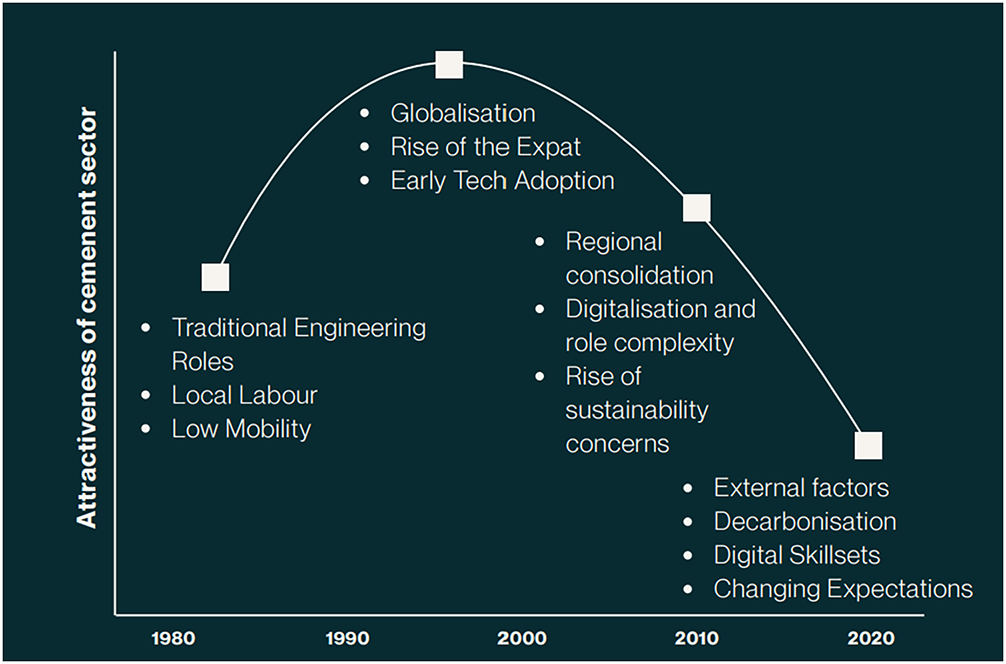
Figure 1 The attractiveness of the cement sector [1]
However, industry consolidation, and increased focus on regional operations have significantly reduced these opportunities. International assignments and rotational roles have become less common as companies prioritise cost efficiency and streamlined organisational structures.
While these changes have improved operational efficiency, they have also reduced the cross functional development opportunities that historically served as training grounds for future leaders. As a result, many organisations now find themselves with weaker mid-level talent pipelines.
Combining these factors, we see a worrying trend. We are losing senior expertise and leadership, failing to attract and connect with the new generation of talent, and have reduced the opportunity to develop existing talent in the sector.
Our research also explored the actions organisations are already taking to address these workforce challenges. Many companies recognise the scale of the issue and have begun implementing measures to strengthen their talent pipelines. The most common initiatives identified by respondents include:
1. Attracting recent graduates through university partnerships, internships, and graduate development programmes.
2. Recruiting experienced mid-career professionals, particularly from adjacent sectors such as mining, chemicals, and heavy manufacturing.
3. Pursuing cross-sector recruitment, targeting professionals with transferable digital, automation, and engineering expertise.
4. Expanding international recruitment in order to access wider labour markets and address regional shortages.
5. Improving workforce diversity, particularly notable with initiatives aimed at attracting more women into engineering and operational roles in cement, given current low representation.
While the adoption of these initiatives represents an important step forward, there is enough evidence to suggest that more needs to be done to attract the next generation, to ensure current talent shortages do not worsen over time, and new, evolving skillsets in engineering and data science are consistently brought into the industry.
We therefore believe the sector must rethink how it communicates its role and opportunity. In our report, we propose a simple framework for reframing the industry around four themes that increasingly define its future: the 4 I’s.
• Innovation—highlighting the technologies transforming the sector, including carbon capture, artificial intelligence driven plant optimisation, robotics, and new low-carbon cement chemistries.
• Investment—communicating the billions of dollars being invested globally in plant modernisation, digitalisation, and sustainability initiatives.
• Infrastructure—emphasising cement’s fundamental role in building modern societies, from transport networks and cities to energy systems and housing.
• Impact—demonstrating how professionals in the sector contribute directly to addressing global challenges such as climate transition, sustainable construction, and urban development.
Reframing the industry around these four dimensions can help shift perceptions and communicate the scale of opportunity the sector offers. Whilst organisational programmes bear the majority of the responsibility in doing this, each one of us as stakeholders of the sector can also contribute. During your communications with the next generation, recalling the 4 I’s model can be a useful tool to ensure we are inspiring those networks around us, and communicating the right message to the next generation.