

Cutting-edge classic: Situational Leadership
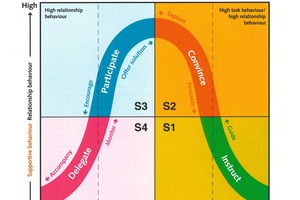
Leaders have to adapt their leadership style both to the as-found situation and to those they wish to lead. That thesis was developed by Paul Hersey, who helped invent the Situational Leadership theory more than 40 years ago. Now, at a time in which market requirements are changing rapidly and employees’ needs are becoming increasingly individual, that theory has become more topical than ever before.
There is no such thing as an ideal style of leadership. That, in a nutshell, is Paul Hersey’s main message. One core element of the message that the “inventor” of Situational Leadership wishes to convey is that the most successful leaders are those who show the most flexibility in their day-to-day approach. Sometimes, employees need praise, and sometimes a reprimand, sometimes active assistance is required, and sometimes a leader just needs to keep out of the way.
Frequently, a leader’s daily routine will consist of giving instructions and providing feedback, with no time left for personnel...