
CURA CLIMATE

Canada’s CURA and Titan innovate the clinker production
images

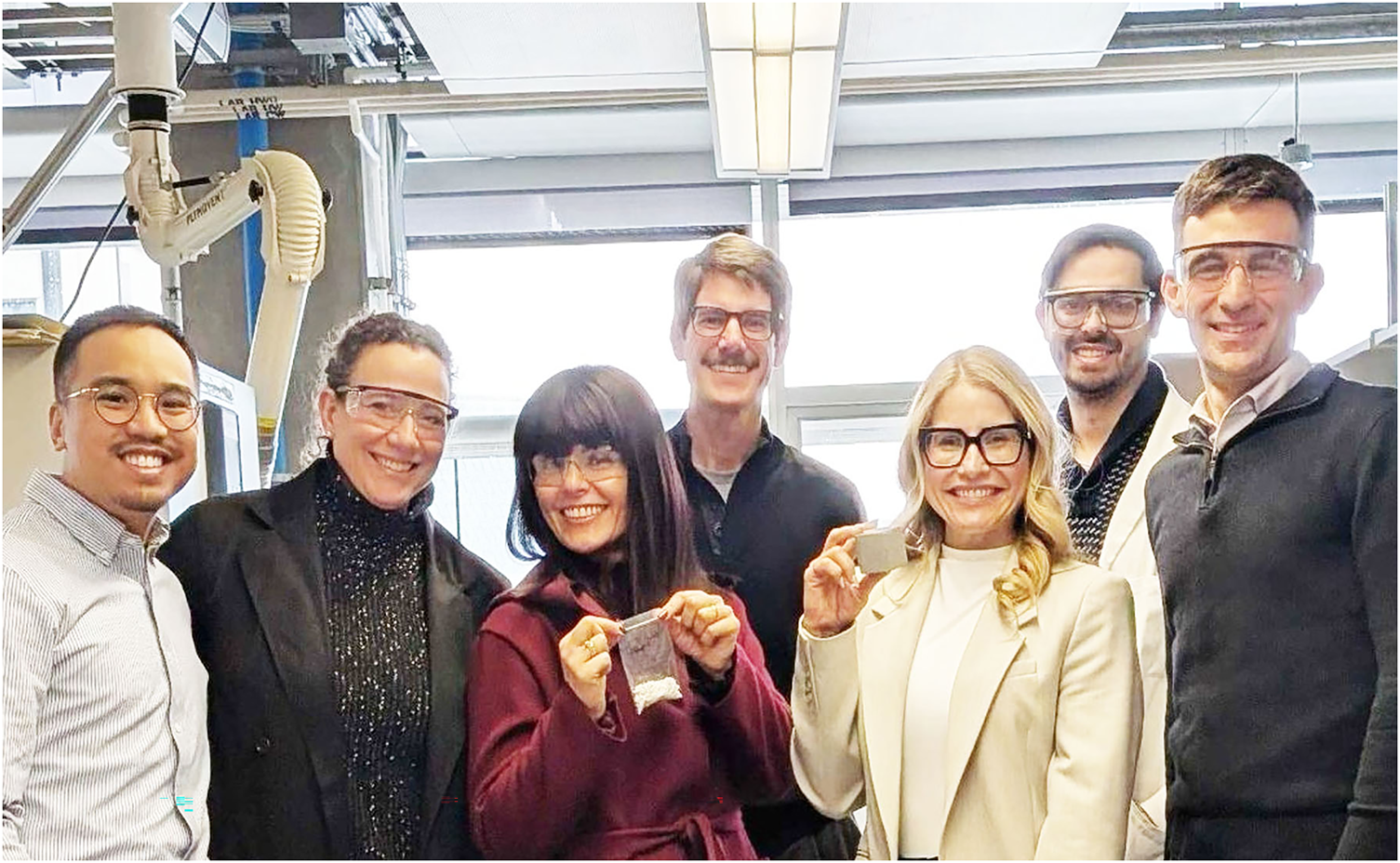
Photo: Teams members of both companies (CURA and Titan)

CURA Climate Inc. (CURA) from Canada and the Titan Group announced in a MoU to test a new innovate limestone splitting technology. The project (photo) starts with laboratory testing, followed by technical and commercial assessments to explore the pilot deployment across Titan’s operations. The CURALYTE process uses electricity for the electrolysis of water. The acid is used to split the raw material, limestone, into high-purity calcium hydroxide and a concentrated stream of CO2 for storage. The base is used to react with the calcium hydroxide to form hydrated lime as feedstock for cement. The technology aims to reduce the CO2 of the clinker production by 85% compared to the conventional process.

Erin R. Bobicki, CEO of CURA: “Decarbonizing cement requires technologies that can integrate with existing infrastructure while dramatically reducing emissions. TITAN has been a global leader in sustainable building materials, and this partnership is an exciting step toward validating our technology with one of the world’s most forward-thinking cement producers.”

About CURA:

CURA is building electrochemical technology to decarbonize cement. Its CURALYTETM-powered electrolyzer cuts emissions by up to 85% while lowering energy use and cost. Designed as a retrofit-ready solution, CURA’s technology integrates with existing feedstocks, infrastructure, and operations. CURA works alongside industrial operators, academic institutions, and strategic collaborators to validate and scale its upstream approach. Partners & collaborators include: Acciona, Captura, Grand Forks Concrete, and Zacua Ventures, to name a few.

https://curaclimate.com/press/cura-and-titan-group-innovation-partnership-for-the-validation-of-low-carbon-cement-technology

https://www.titanmaterials.com/wp-content/uploads/2026/04/20042026_CURA_and_TITAN_Innovation_partnership_en.pdf

images Copyright © 2026 The Author. Published by Tech Science Press.
This work is licensed under a Creative Commons Attribution 4.0 International License, which permits unrestricted use, distribution, and reproduction in any medium, provided the original work is properly cited.

Related articles:

Issue 04/2026 ARTICLE

Research on hydrogen applied to calcinate cement clinker coupled with alternative fuel for carbon emission reduction

Fuel consumption in the calciner represents 60% of the total fuel used in cement clinker production. This study investigates the feasibility of utilizing hydrogen as a sustainable alternative to fossil fuels in the calciner. A numerical model was developed to simulate a hydrogen-powered calciner...

more
Issue 04/2026 MAGSORT

Magsort substitutes limestone in the clinker production by using steel slags

Photo: First batch of clinker from Zero-Slag raw material (Credit: Magsort) At the 18th Global Slag Conference April 14–15 in Istanbul, Finnish Magsort presented their latest results on the substitution of limestone in the clinker production. Although limestone is cheap and abundant, the...

more
Issue 02/2026 TITAN MATERIALS

Titan Materials to expand its US footprint with Keystone Cement

Photo: Roanoke integrated cement plant (Credit Titan Group)Titan Materials’ subsidiary Titan America has entered into an agreement to acquire Keystone Cement. Keystone operates an integrated cement plant in Bath in Pennsylvania’s Lehigh valley with a cement capacity of 0.9 Mta, serving a 5.6 Mta ...

more
Issue 01/2026 NORM CEMENT

Azerbaijan’s Norm Cement increased clinker capacity

Photo: Cement plant in South (Credit Norm Cement)Azerbaijan’s “Norm” OJSC, which is a part of NEQSOL Holding, has successfully completed a major project to expand the clinker production capacity of the Norm Cement plant (photo) in South Caucasus. As a result, the plant’s annual clinker capacity has ...

more
Issue 08/2025 THYSSENKRUPP POLYSIUS | TITAN

TITAN Group and thyssenkrupp Polysius join forces to develop pioneering low-carbon products with meca® clay technology

TITAN Group and thyssenkrupp Polysius are taking another significant step toward low-carbon cement production by announcing a strategic partnership to advance Polysius’ meca® clay—a breakthrough...

more
Issue 07/2025 EGGERSMANN ANLAGENBAU GMBH

Eggersmann FUEL: landfill diversion meets fuel substitution

Maximum landfill diversion should not be seen as a challenge in waste management but rather as a chance for a more sustainable clinker production. Only the biogenic organic components in RDF do not contribute to global warming. With the Eggersmann FUEL process not only the recyclables in MSW are converted to RDF but also the organic fraction will be an important part of high-quality alternative fuel.

more
Issue 07/2025 REFRATECHNIK

Responsible refractory adaptation for sustainable cement clinker production: Green Challenge accepted

The energy-intensive mineral industry is closely monitored due to its carbon impact, mainly CO2 emissions. Actions are taken by the cement and lime industry to reduce their amount by various measures,...

more
Issue 02/2025 AUMUND | HOLCIM

eLCC – A new solution for calcined clay

A significant contribution to the decarbonisation of cement production is being made, with new types of cement which use calcined clay and a smaller proportion of clinker than in traditional cement manufacture. Clay calcination requires lower burning temperatures than clinker production, so the carbon footprint of the cement is reduced significantly.

more
×