
OTTO-VON-GUERICKE UNIVERSITY MAGDEBURG/GERMANY

Energy consumption and CO2 content in the flue gas of normal shaft kilns | Part 1: Influence of the air excess number
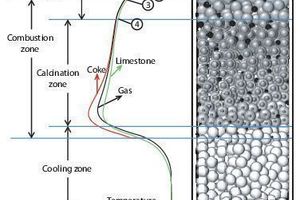
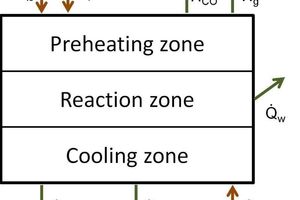
Balances were used to determine the effect of the contents of CaCO3, MgCO3, water and inert matter in limestone, the air excess number, the kiln wall losses and the residual CO2 content on energy consumption and CO2 content in the flue gas.

1 Introduction

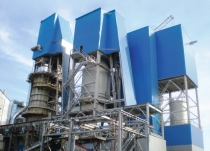
The so-called multi-fuel-fired normal shaft kiln (NSK) is one of the oldest types of lime shaft kiln, in which burnt lime is produced from limestone by expelling the carbon dioxide gas. This type of kiln is fired with lumpy solid fuels. Due to this mode of firing, operation of the kiln has special characteristics that result in complex process technology. This kiln type is used in the lime industry in order to manufacture so-called medium to hard-burnt lime. It is also the main type of kiln to be found in the sugar and soda industries, only with the difference that two products...

Related articles:

Issue 12/2014 OTTO-VON-GUERICKE-UNIVERSITÄT MAGDEBURG/GERMANY

Energy consumption and CO2 content in the flue gas of normal shaft kilns: Part 2: Influence of the limestone quality and the process parameters

This Part 2 of the article describes the influence of limestone quality and the process parameters, CO content, kiln wall heat losses and moisture...

more
Issue 10/2015 OTTO VON GUERICKE UNIVERSITY MAGDEBURG

Simulation of limestone calcination in ­normal shaft kilns – Part 2: Influence of process parameters

For normal shaft kilns it is described how the axial profiles of the surface and core temperature of the stones, their decomposition and the gas...

more
Issue 04/2012

Simulation of lime calcination in PFR kilns – Influence of source and size of limestone

Besides the influence of energy consumption and throughput, the origin and the particle size of the limestone during calcination in the PFR shaft...

more