
测试详情页广告位2
OTTO VON GUERICKE UNIVERSITY MAGDEBURG I UNIVERSITY OF DUISBURG-ESSEN

Thermophysical properties of lime as a function of origin (Part 3): Emissivity
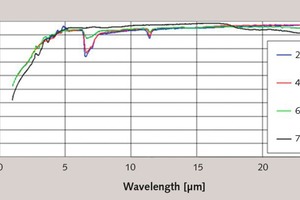
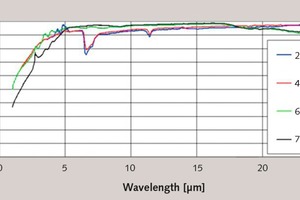
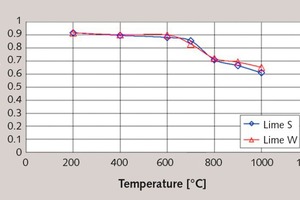
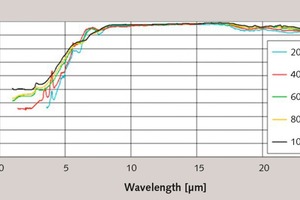
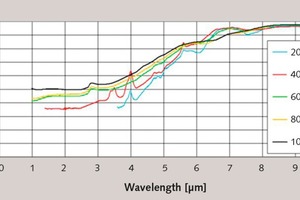
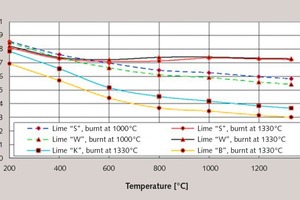
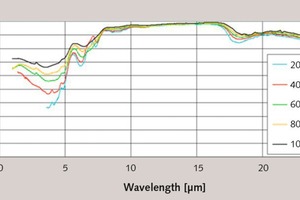
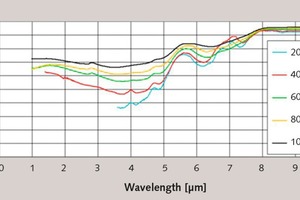
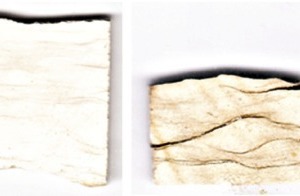
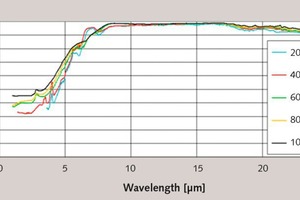
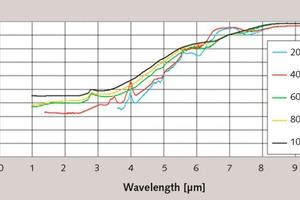
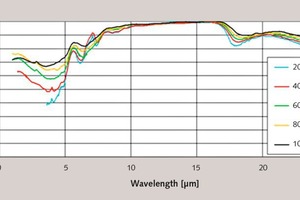
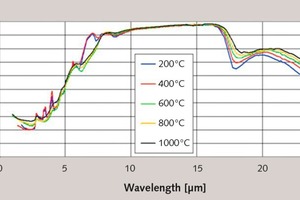
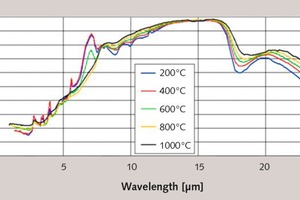
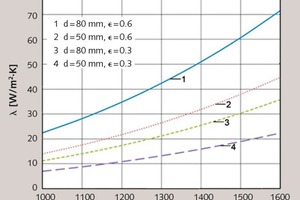
Significant temperature homogenisation takes place in the cross-section of shaft kilns due to radiation. This heat transport is proportional to the emissivity of the lime. It is shown that the emissivities are in the 0.35 to 0.70 range, depending on the origin of the limestone. Heat fluxes can therefore differ by up to a factor of 2, depending on the origin.

1 Introduction

The limestone burning process is determined by a lot of material properties. These thermophysical properties depend on the origin of the limestone. The first two parts of this series [1, 2] investigated the specific heat capacity, enthalpy of reaction and decomposition pressure of various limestones.

This third part focuses on the emissivity. This, to a significant extent, determines the temperature homogeneity in the cross-section of shaft kilns. In parallel-flow regenerative (PFR) and in single-shaft counterflow kilns, the fuel is injected via lances. There is thus a discrete...


Related articles:

Issue 3/2017 OTTO VON GUERICKE UNIVERSITY MAGDEBURG

Thermophysical properties of lime as a function of origin (Part 4): Thermal conductivity

The calcination behavior of limestone, which is a natural raw material, depends strongly on the origin. In this multi-part series, the...

more
Issue 10/2019 CIMPROGETTI SRL LIME TECHNOLOGIES

Reactivity and overburning tendency of quicklime burnt at high temperature

This study investigates the impact of different burning temperatures on quicklime slaking reactivity. Moreover, it reviews the state of the art of the effect of carbonate rock fabrics and calcination...

more
Issue 3/2016 OTTO VON GUERICKE UNIVERSITY MAGDEBURG

Simulation of limestone calcination in normal­ shaft kilns – Part 3: Influence of particle size ­distribution and type of limestone

The decomposition process of individual particles with different particle size distributions and different types of limestone will be presented. Residual CO 2 can only be found in the largest ...

more
×