

ARTICLE
Low-temperature sintering of low-grade magnesite for magnesium phosphate cement clinker: hydration mechanism and performance regulation
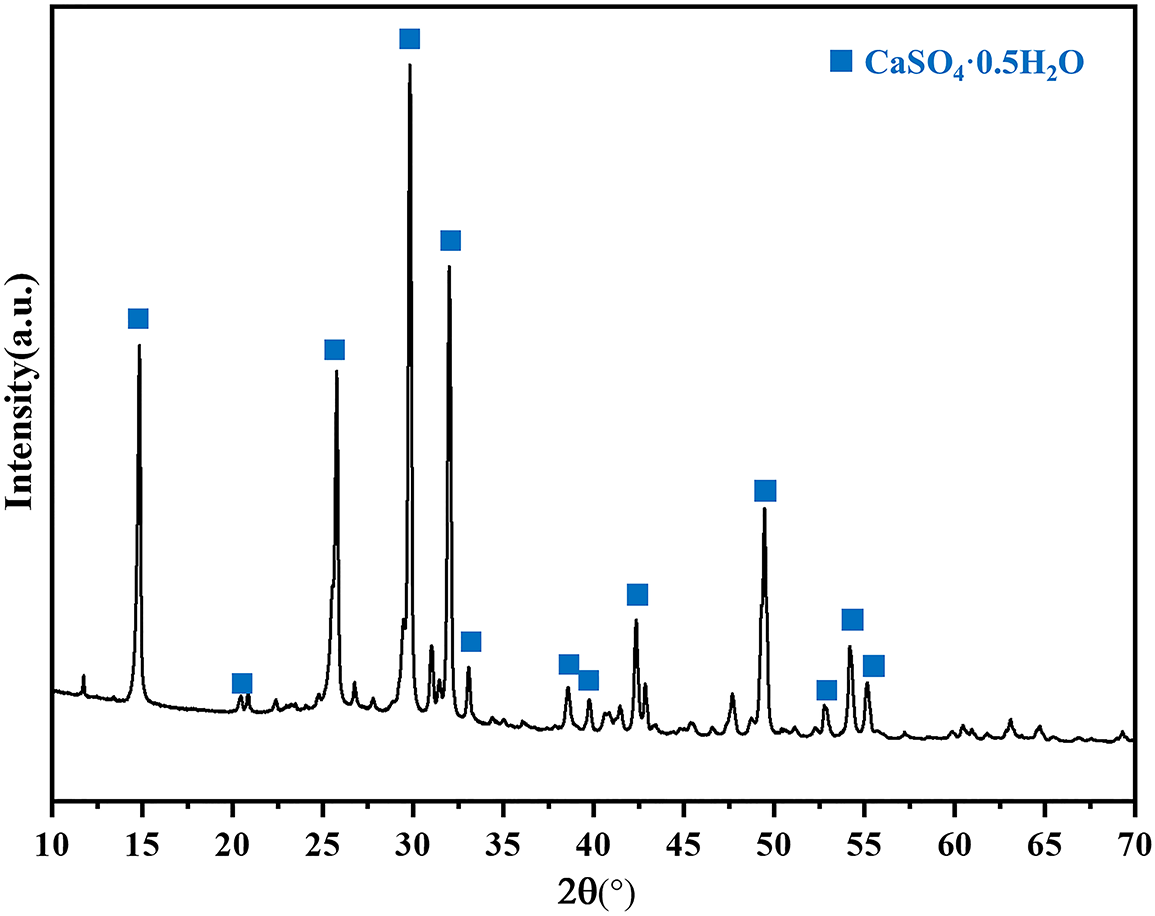
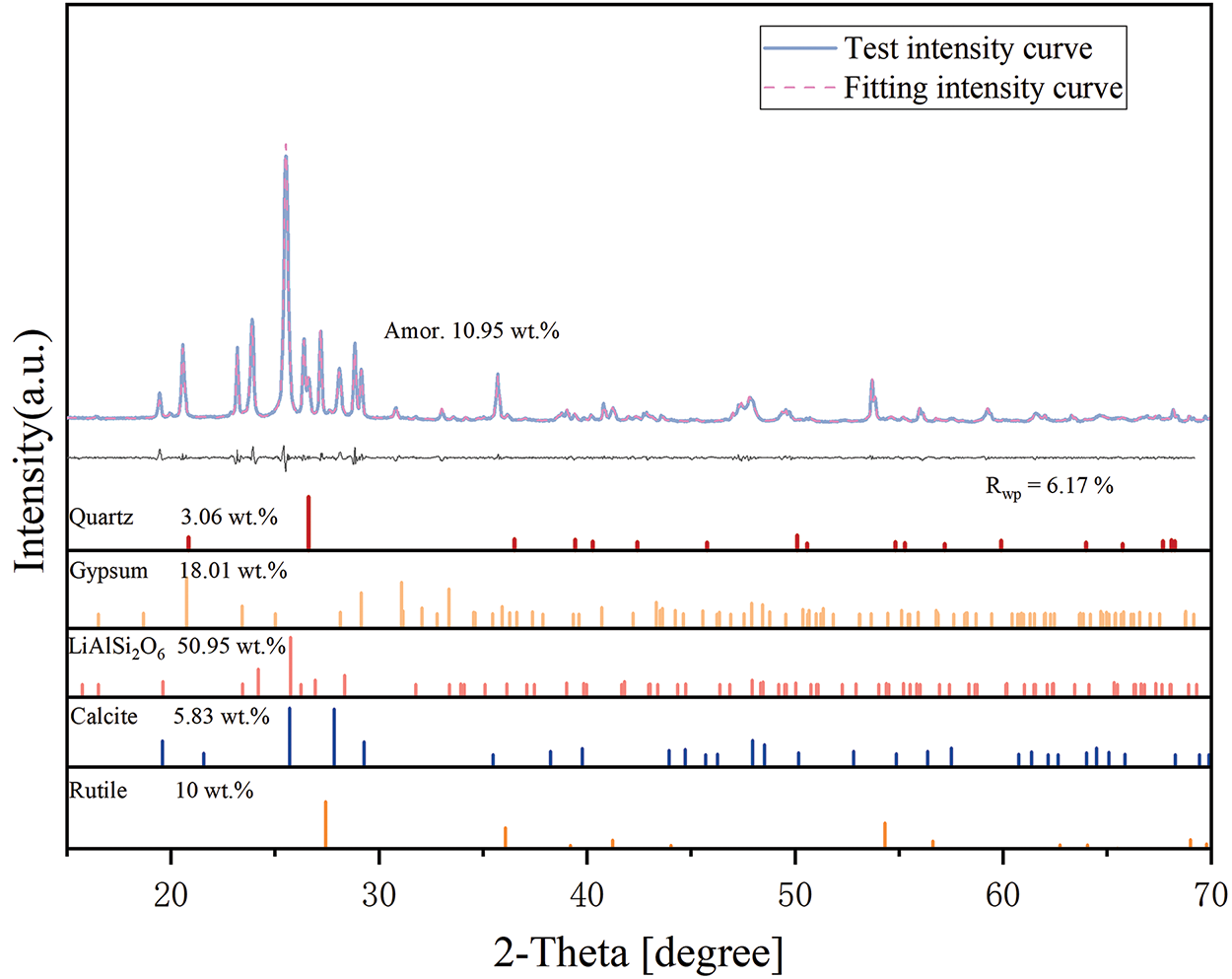
To enable efficient utilization of low-grade magnesite and reduce the production cost of magnesium phosphate cement (MPC), this study developed a low-temperature sintering process (1100–1250°C) to prepare MPC clinker from a Mg(OH)2–Al2O3–CaCO3 ternary system. Based on phase diagram analysis, the raw material proportions were optimized, yielding an optimal molar composition of 58.3:14.6:27.1. Using X-ray diffraction (XRD), isothermal calorimetry, Vicat setting time measurement, and compressive strength testing, the phase evolution, hydration heat, setting behavior, and mechanical properties were investigated. After sintering at 1200°C, the resulting clinker was used to prepare MPC paste, which achieved a compressive strength of 16.3 MPa after 1 day and an initial setting time of 17.15 min. Analysis of the hydration mechanism reveals that Al2O3 retards the hydration process by forming MgAl2O4, whereas CaO enhances early strength through the formation of calcium phosphate hydrates. Compared with conventional high-temperature processes (1500–1800°C), this method reduces energy consumption by over 30%, offering a sustainable pathway for the high-value utilization of low-grade magnesite.
REFERENCES
1. Xu B, Winnefeld F, Lothenbach B. Zinc acetate as a set retarder for magnesium potassium phosphate cements. Cem Concr Compos. 2025;162:106114. doi:10.1016/j.cemconcomp.2025.106114.
2. Wang N, Li Y, Long SR, Lin H, Wang ZG, Liu XF. Research on the preparation and pore structure of porous brucite-based magnesium phosphate cement. Constr Build Mater. 2025;478(1):141416. doi:10.1016/j.conbuildmat.2025.141416.
3. Garcia-Lodeiro I, Chhaiba S, Husillos-Rodriguez N, Palomo A, Kinoshita H. Development of magnesium phosphate cement based on low-grade MgO. Materials. 2025;18(6):1198. doi:10.3390/ma18061198.
4. Guo BL, Gao YX, Lu D, Wang KX, Qin HY, Wang C, et al. Investigation on the reaction mechanisms of wollastonite with magnesium phosphate cement. Cem Concr Compos. 2026;170(7):106588. doi:10.1016/j.cemconcomp.2026.106588.
5. Zheng YZZ, Li WH, Zhou Y, Chen C, Xing JR, Chen WT, et al. Magnesium phosphate cement-based composites with selective significantly enhanced thermoelectric potential. Renew Energ. 2026;264(1):125594. doi:10.1016/j.renene.2026.125594.
6. Williams E, Annooz S, Myers JJ. Bond behavior of magnesium potassium phosphate cement (MKPC) coating for steel reinforcement in conventional concrete and related repair materials. Procedia Struct Integr. 2024;64(8):1573–80. doi:10.1016/j.prostr.2024.09.411.
7. Liu F, Wang BM, Zhou CJ, Chen ZT. Effects of coal-based synthetic natural gas slag on hydration behavior, microstructure and mechanical performance of magnesium potassium phosphate cement. Constr Build Mater. 2026;524:146236. doi:10.1016/j.conbuildmat.2026.146236.
8. Lazorenko G, Kasprzhitskii A. A review of magnesium-rich wastes and by-products as precursors for magnesium phosphate cements: challenges and opportunities. Environ Res. 2025;285(11):122402. doi:10.1016/j.envres.2025.122402.
9. Zheng YZZ, Zhou Y, Xing JR, Li WH, Huang XM. Progresses of green magnesium phosphate cement: production, energy consumption, substitution and recycling of magnesia. J Build Eng. 2025;99(7):111563. doi:10.1016/j.jobe.2024.111563.
10. Zhang XZ, Zhang ZY, Liu YS, Yang LC, Zheng Y, Kang SG, et al. Preparation of magnesium potassium phosphate cement from magnesite tailings under lower calcination temperature. Constr Build Mater. 2024;451(2):138868. doi:10.1016/j.conbuildmat.2024.138869.
11. Gu XW, Ding XC, Ge XW, Wang SY, Wang H, Liu JP. Lightweight and high-strength foam concrete based on low-grade magnesite: proportion optimization and performance characterization. Miner Eng. 2026;236(2):109923. doi:10.1016/j.mineng.2025.109923.
12. Zhu HY, Shao SW, Guo MZ, Zhang SY, Zhang Y. Engineering properties and sustainability evaluation of crushed low grade magnesite mortars. J Clean Prod. 2023;425(21):138979. doi:10.1016/j.jclepro.2023.138979.
13. Formosa J, Lacasta AM, Navarro A, del Valle-Zermeño R, Niubó M, Rosell JR, et al. Magnesium phosphate cements formulated with a low-grade MgO by-product: physico-mechanical and durability aspects. Constr Build Mater. 2015;91(2):150–7. doi:10.1016/j.conbuildmat.2015.05.071.
14. Gu XW, Huang DW, Ma YL, Ding XC, Liu SQ. Calcination behaviour, pyrolysis kinetics, and sustainable development of low-grade magnesite for high-purity MgO production. Miner Eng. 2026;235(5):109890. doi:10.1016/j.mineng.2025.109890.
15. Gong XF, Yao J, Jia YK, Yin C, Wang WZ, Fu YL, et al. Surface pretreatment effect on the separation and purification of magnesite and dolomite. J Cent South Univ. 2025;32(3):977–90. doi:10.1007/s11771-025-5918-2.
16. Tan YS, Zhang ZB, Wen J, Dong JM, Wu CY, Li Y, et al. Preparation of magnesium potassium phosphate cement using by-product MgO from Qarhan Salt Lake for low-carbon and sustainable cement production. Envir Res. 2022;214:113912. doi:10.1016/j.envres.2022.113912.
17. Zhao Y, Zhu GC. A technology of preparing honeycomb-like structure MgO from low grade magnesite. Int J MIner Process. 2014;126(14–15):35–40. doi:10.1016/j.minpro.2013.11.006.
18. Sun L, Chen XY, Li C, Wu ZD, Yang ZW, Liang TQ. Mix proportion design and reaction mechanism of alkali-activated slag mortar with marine materials. Constr Build Mater. 2025;492(1):142897. doi:10.1016/j.conbuildmat.2025.142897.
19. Zeng HY, Jin M, Li WW, Du FY, Wang XX, Ma YF, et al. Thermal-fatigue challenges in the interfacial transition zone (ITZ) of concrete: how fly ash modulates degradation? Cem Concr Compos. 2026;168:106500. doi:10.1016/j.cemconcomp.2026.106500.
20. Li CX, Zhang XT, Shi T, Song YF, Ouyang YH. Enhancement of the mechanical properties and spatial uniformity of lightweight expanded polystyrene concrete using carbonated recycled fine aggregate. Case Stud Constr Mat. 2026;24:e05864. doi:10.1016/j.cscm.2026.e05864.
21. Azimi R, Shahgholi M, Khandan A. Fabrication and characterization of reinforced glass ionomer cement by zinc oxide and hydroxyapatite nanoparticles. Heliyon. 2024;10(20):e39063. doi:10.1016/j.heliyon.2024.e39063.
22. Wang JL, Jiang XH, Wu CY. Preparation of magnesium oxide and potassium magnesium phosphate cement from lithium- extracting magnesium slag. Ceram Silikaty. 2023;67:109–19. doi:10.13168/cs.2023.0008.
23. Li Y, Zhang GS, Hou DS, Wang ZG. Nanoscale insight on the initial hydration mechanism of magnesium phosphate cement. Constr Build Mater. 2021;276(5):122213. doi:10.1016/j.conbuildmat.2020.122213.
24. Zhang Y, Lai Z, Chen Z, Liu Z, Lu Z, Li J. Low-temperature calcination of dolomite and its application in the preparation of magnesium phosphate cement. Constr Build Mater. 2025;464:140162. doi:10.1016/j.conbuildmat.2025.140162.
25. Wang HX, Ouyang SZ, Lv YJ, Chen SQ, Zhai ZH, Wang DC, et al. Mechanical properties and microstructural mechanism of ternary geopolymer cementitious materials based on molybdenum tailings, red mud and GGBS. Constr Build Mater. 2026;520:145938. doi:10.1016/j.conbuildmat.2026.145938.
26. Lv YJ, Liu ZJ, Ouyang SZ, Yuan CF, Zhu XB, Wang MY, et al. Preparation and performance of an all-solid-waste alkali-activated cementitious material incorporating molybdenum tailings, Bayer red mud, and calcium carbide slag. TranspoGeotech. 2026;61(11):102107. doi:10.1016/j.trgeo.2026.102107.
27. Ren CZ, Wang WL, Wu S, Yao YG. Preparation of sulphoaluminate-magnesium potassium phosphate cementitious composite material under low-temperature. Constr Build Mater. 2019;202(11):246–53. doi:10.1016/j.conbuildmat.2018.12.180.
28. Justs J, Wyrzykowski M, Winnefeld P, Bajare D, Lura P. Influence of superabsorbent polymers on hydration of cement pastes with low water-to-binder ratio: a calorimetry study. J Therm Anal Calor. 2014;115(1):425–4323. doi:10.1007/s10973-013-3359-x.
29. Huang W, Kazemi-Kamyab H, Sun W, Scrivener K. Effect of cement substitution by limestone on the hydration and microstructural development of ultra-high performance concrete (UHPC). Cem Concr Compos. 2017;77:86–101. doi:10.1016/j.cemconcomp.2016.12.009.
30. Soudée E, Péra J. Influence of magnesia surface on the setting time of magnesia-phosphate cement. Cement Concrete Res. 2002;32(1):153–7. doi:10.1016/S0008-8846(01)00647-0.
31. Xiao Y, Wang CF, Chen B. Understanding the role of MgO fineness on the performance of magnesium phosphate cement through multi-scale study. Constr Build Mater. 2024;455(5):139095. doi:10.1016/j.conbuildmat.2024.139095.
32. Dai FL, Wang HT, Jiang ZC, Zhao SX. Hydration mechanism of magnesium phosphate cement based on thermokinetics. Chinese J Mat Res. 2018;32:247–54. doi:10.11901/1005.3093.2017.236.
Cite This Article
APA Style
Deng, Y., Feng, X. (2026). Low-temperature sintering of low-grade magnesite for magnesium phosphate cement clinker: hydration mechanism and performance regulation. ZKG International, 79(6), 79–107. https://doi.org/10.32604/zkg.2026.084786
Vancouver Style
Deng Y, Feng X. Low-temperature sintering of low-grade magnesite for magnesium phosphate cement clinker: hydration mechanism and performance regulation. ZKG Int.. 2026;79(6):79–107. https://doi.org/10.32604/zkg.2026.084786
IEEE Style
Y. Deng and X. Feng, “Low-temperature sintering of low-grade magnesite for magnesium phosphate cement clinker: hydration mechanism and performance regulation,” ZKG Int., vol. 79, no. 6, pp. 79–107, 2026. https://doi.org/10.32604/zkg.2026.084786