

Supernatant nanographite solution for advance treatment of C class fly ash cement systems – Part 2
![3 CH content difference between nG-blended and control pastes [49, 50]](/uploads/images/2015/w300_h200_x400_y288_101545442_e0321d16d2.jpg)
![4 Comparison of the initial and final setting times between all examined cement pastes [49, 50]](/uploads/images/2015/w300_h200_x400_y259_101545438_59afc04742.jpg)
![5 Effect of nG-contents on the fluidity of ASTM I, ASTM I/nG, FA-C and FA-C/nG mortars (w/c = 0.76, w/s = 0.16, c/s = 0.21) [49, 50]](/uploads/images/2015/w300_h200_x400_y252_101545432_41a233f747.jpg)
![6 Compressive strength gain effects of nG. Ratio of compressive strength gain = 100 x; strength of mix with nG/strength of control mix (w/c = 0.76, w/s = 0.16, c/s = 0.21) [49, 50]](/uploads/images/2015/w300_h200_x400_y252_101545419_7a28bf4459.jpg)
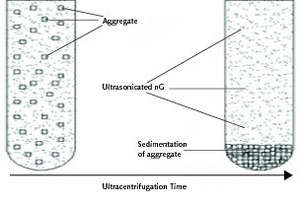
This paper examines the effects of extremely dispersed nG by ultrasonication on the CFA-C system. The subject of Part 1 were the chapters Introduction, Materials and Methods, whereas Part 2 now focuses on Results and Conclusions. Research results indicate that the use of ultrasonicated nG is shown to be favorable in terms of the absorbance spectra of ultrasonicated nG, CH-contents, setting times, rheologies and strength gains at early ages.
3 Results and discussions
3.1. Absorbance spectra
The UV-visible spectra displays an increasing absorbance attributed to the graphitic p-plasmon resonance. For the concentrated suspension, the peak is not as well distinguished, indicating that the nGs are relatively more concentrated. The concentration of the nGs in the suspensions has been quantified by using Beer’s law, which illustrates a linear relationship between the optical absorbance and the concentration of the substance. Generally, the intensity of the corresponding spectra depends on the concentration of the nGs – i.e., samples with...