

Aerogel and gypsum-based materials: innovative integration of building energy efficiency materials
1 Industry demand and performance contradictions
Against the backdrop of deepening global consensus on carbon neutrality and rising building energy efficiency standards, new wall materials with high-efficiency thermal insulation, safety and fire resistance, convenient construction, and environmental friendliness have become an important direction for technological innovation and industrial upgrading in the global construction field. Gypsum-based materials, mainly made from natural gypsum or industrial by-product gypsum such as desulfurized gypsum and phosphor gypsum, have a series of advantages, including low production energy consumption, fast setting speed, good workability, non-combustibility, and good sound insulation. They are widely used in interior wall plastering, lightweight partition walls, ceiling panels, decoration material, and prefabricated components.
Although traditional gypsum-based products (such as gypsum board and plastering mortar) are convenient to construct and have excellent fire resistance, they have obvious shortcomings in thermal insulation. Their thermal conductivity is much higher than that required by standards such as the US ASHRAE 90.1 and China’s ultra-low energy consumption building standards, making it difficult to meet the internal wall insulation needs in severe cold areas, nor can they adapt to scenarios such as global old building renovation and high-end residential upgrading.
At present, there are two mainstream methods to enhance thermal insulation performance of gypsum-based materials. The first method is to increase the thickness of gypsum-based boards. Although this method can enhance thermal insulation, it comes with drawbacks such as higher costs, occupation of indoor space, and reduced usable floor area, making it particularly unsuitable for the renovation of old buildings in densely populated regions such as Europe and Japan. The second method is to attach external insulation layers, such as extruded polystyrene boards and rock wool in buildings. This approach involves complex procedures, prolonged construction periods, poor interfacial bonding, and common defects like hollowing and peeling. Therefore, how to efficiently improve the thermal insulation capacity of gypsum-based materials has become a bottleneck restricting their application in building energy conservation.
2 Solution: composite of aerogel and gypsum-based materials
Aerogel is a nano-porous, lightweight inorganic thermal insulation material with a thermal conductivity much lower than that of traditional thermal insulation materials. The aerogel-based gypsum composite material prepared by introducing aerogel into the gypsum system can retain the advantages of gypsum, such as convenient construction, greenness, and fire resistance, and realize the integration of structure, decoration, and thermal insulation. It is an important path for the upgrading of the gypsum industry and the practice of carbon neutrality goals in various countries.
2.1 Composition of aerogel-based gypsum materials
The raw material composition of aerogel-based gypsum materials mainly includes the following components:
Cementitious matrix material—Mainly composed of building gypsum (β-type hemihydrate gypsum), and industrial by-product gypsum, such as desulfurized gypsum and phosphor gypsum, can be used to reduce costs and utilize solid waste. In some systems, incorporating a small amount of materials such as cement or lime can improve the strength and water resistance of gypsum [1, 2].
Aerogel functional component—Silica aerogel is the most widely adopted aerogel type used in gypsum-based materials, available in the forms of powder, particles, and pre-dispersed slurry. Hydrophilic aerogel features favorable dispersibility yet tends to collapse after water absorption, while hydrophobic aerogel delivers superior thermal insulation and moisture resistance but suffers from poor compatibility and severe agglomeration. For practical engineering applications, modified aerogel or specialized slurry is commonly adopted to balance dispersion performance and thermal insulation efficiency. The compounding of aerogel with thermal insulation fillers such as glass microspheres and expanded perlite can achieve synergistic performance improvement, enhance the stability of gypsum-based materials, reduce production costs, and facilitate industrial promotion and application.
Reinforcing and toughening components—The incorporation of aerogel tends to a decrease the mechanical properties of gypsum-based materials. To address this, reinforcing fibers such as glass fiber or polypropylene fiber are commonly added, typically at a mass fraction of 1%–3%, to improve flexural strength, impact resistance, and crack resistance.
Functional admixtures—To ensure the workability and durability of gypsum-based materials, admixtures such as water reducers, retarders, accelerators, defoamers, dispersants, and water repellents are usually added to the system.
2.2 Composite process of aerogel and gypsum-based materials
Direct addition—Gypsum, aerogel, fibers, and admixtures are uniformly dry-mixed, then combined with water to form a slurry (Figure 1) [3], which is then fabricated into products by plastering, casting, molding, curing, and drying. Generally, the dry mixing speed is 300–500 rpm/min, the mixing time is 3–5 min, the water–gypsum ratio is 0.9–1.2, the curing temperature is 20–25°C, and the relative humidity is 40–60%. However, hydrophobic aerogel tends to agglomerate, segregate, and float to the surface in slurry. To address these concerns, 0.3%–0.6% silane coupling agent or high-efficiency dispersant can be added for surface treatment during mixing, and multi-stage mixing is adopted to improve uniformity. This process route is relatively simple, requires only a low investment in equipment, and has high production efficiency. However, it is quite challenging to control the uniformity of the properties of the prepared materials.
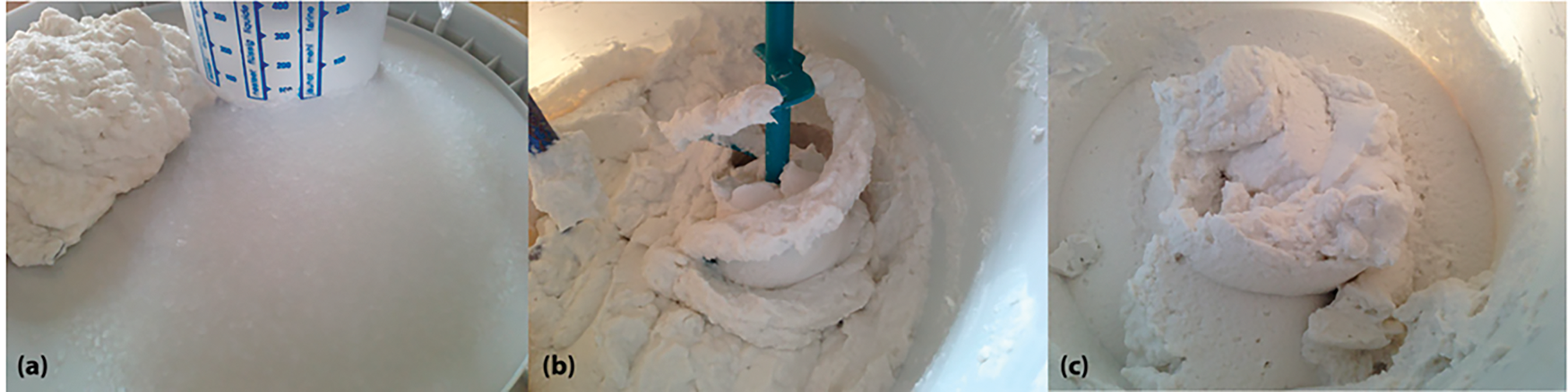
Figure 1 The direct mixing steps of aerogel with plaster: (a) original components; (b) mixing phase; (c) final composition of the plaster [3]
Pre-dispersion—Hydrophobic aerogel is modified to introduce hydrophilic groups onto the particle surfaces and prepared into an aqueous aerogel slurry with a solid content of 15%–25%. The slurry is then blended with gypsum slurry and processed via casting, molding, and curing to form aerogel gypsum-based products. The slurry dispersion speed is controlled at 800–1500 r/min, the dispersion time is 10–15 min, and the mixing temperature is 20–25°C. To prevent strength reduction and prolonged curing time caused by an increased water–gypsum ratio, 0.5%–1.0% high water-reducing polycarboxylate superplasticizer can be incorporated, gypsum gradation can be optimized, and constant temperature and humidity can be applied for accelerated curing. This method can significantly improve the dispersion state of the aerogel in the gypsum matrix, thereby solving the problem of agglomeration and floating of the aerogel in the gypsum matrix and reducing interface defects.
Post-treatment—The gypsum-based substrate is fully prepared in advance. Afterwards, aerogel-based material (such as silica aerogel reinforced with PET fibre felt, or aerogel thermal insulation coating) is applied as a functional layer, which is combined with gypsum-based materials (such as standard gypsum boards and gypsum plaster layers) to form composite thermal insulation gypsum products. The dry film thickness of the insulation coating is generally 1–3 mm, the spraying pressure is 0.3–0.6 MPa, the recommended application temperature is 5–35°C, and the surface drying time is 2–4 h. To overcome issues with thermal insulation coating, such as poor adhesion, peeling, and pinholes, the substrate surface can be ground and dusted, sealed with a matching primer and topcoat, and the coating viscosity and application thickness can be properly controlled. This technical route features high compatibility with existing production processes of gypsum-based materials. Construction can be directly carried out on the surface of finished gypsum substrates, and only a simple coating or composite process is required to achieve a substantial improvement in the thermal insulation performance of final products.
3 Product advantages and applications
Compared with traditional gypsum-based materials, aerogel composite gypsum materials deliver greatly enhanced thermal insulation with ultra-thin and high-efficiency heat preservation, without occupying indoor space. While maintaining excellent fire resistance, sound insulation, and environmental friendliness, they also provide moisture-proof, anti-condensation, and anti-mold functions. This effectively solves the poor thermal insulation bottleneck of conventional gypsum products. This composite material is widely applicable to the interior decoration of residences, office buildings, hospitals, and schools. It can be used for interior partitions, top floors, and household partition wall insulation, and presents broad application potential in the energy-saving renovation of existing buildings.
Total Cost of Ownership—Although the raw material unit price of aerogel-based gypsum materials is slightly higher than that of traditional gypsum products, their ultra-thin and high-efficiency thermal insulation can greatly reduce the structural thickness. A construction thickness of 4–6 cm can replace the traditional insulation system of 10–18 cm, increasing the building’s usable area ratio by 3%–8% and reducing structural loads and the consumption of enclosure material. Meanwhile, the integrated function of aerogel-based gypsum materials eliminates multiple processes such as leveling, moisture-proofing, and mold-proofing, reducing labor, machinery, and management costs, with a comprehensive cost reduction of 15%–30%. From a life-cycle perspective, aerogel-based gypsum materials can reduce energy consumption for building heating and cooling by approximately two-thirds, and the incremental cost can be recovered through energy-saving benefits within 5–8 years. The long-term operating cost is significantly better than traditional schemes, and the overall life-cycle total cost of ownership is reduced by 10%–25%.
Construction Productivity—Aerogel-based gypsum materials are fully compatible with traditional gypsum construction processes without requiring special equipment or methods. They can be applied via plastering, casting, prefabrication, assembly, spraying (Figure 2) [3], and other means. Processes are simplified by 2–4 steps, on-site construction efficiency is improved by 20%–40%, and the construction period is effectively shortened. The material is lightweight and easy to handle, greatly reducing labor intensity. It is suitable for large-scale construction and rapid delivery, and is particularly applicable to new construction projects with tight schedules and renovation projects in old residential areas.
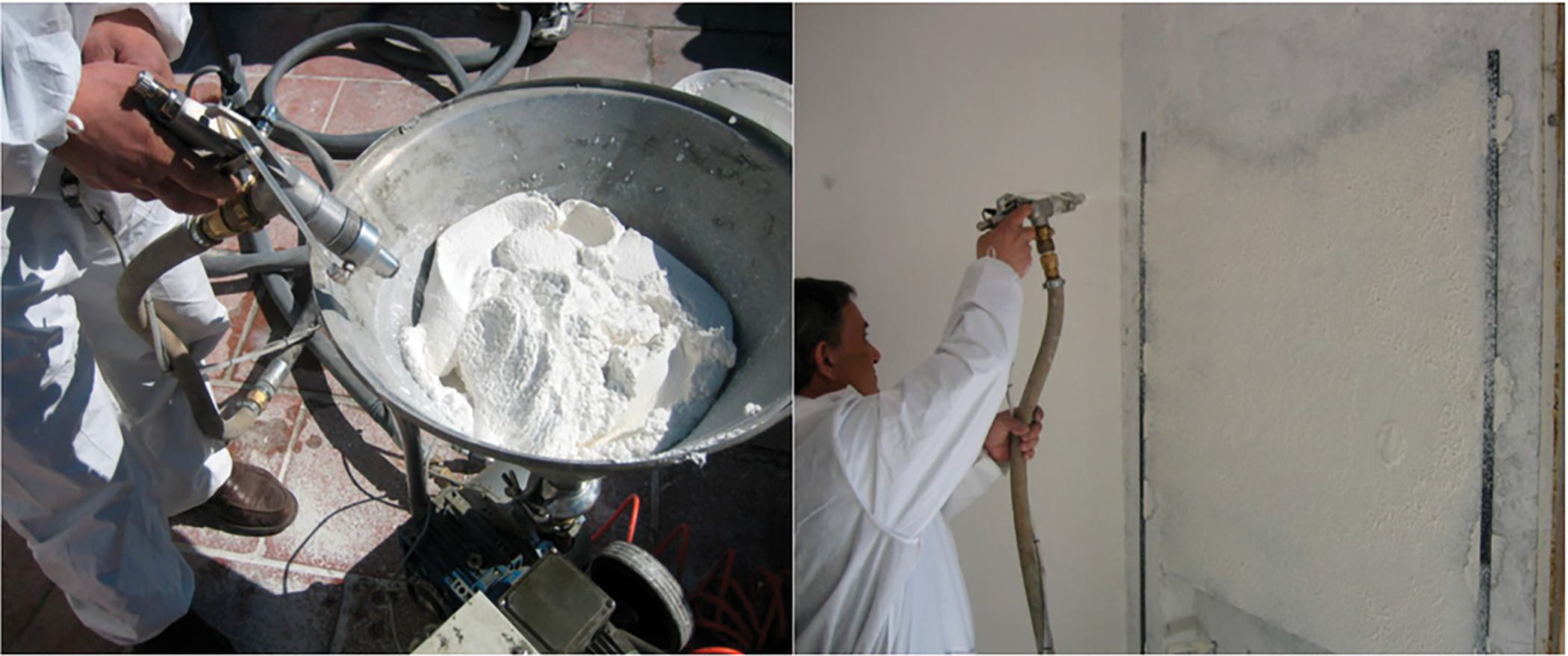
Figure 2 In situ application of the aerogel-based plaster [3]
Integration Feasibility—Aerogel-based gypsum materials can be integrated with various enclosure structures such as interior partitions, household separation walls, top-floor interior walls, suspended ceilings, and prefabricated wall panels. They are compatible with cast-in-situ construction, factory prefabrication, on-site assembly, 3D printing, and other construction modes without additional supporting or fixing systems. Furthermore, aerogel-based gypsum materials provide integrated functions including fire resistance, moisture resistance, anti-condensation, anti-mold, and sound insulation. They can replace multiple functional materials, reduce risks caused by cross-construction of different materials, improve system stability and durability, and show strong adaptability in the renovation of existing buildings, historic building protection, high-density urban buildings, and ultra-low energy consumption buildings.
Compared with traditional gypsum-based materials and conventional insulation structures, aerogel-based gypsum materials demonstrate outstanding advantages not only in material performance but also in total cost of ownership, construction efficiency, integration adaptability, and engineering value, providing quantitative support for decision-making in the entire construction industry chain. Practical engineering applications have verified the comprehensive performance of aerogel-based gypsum materials in projects worldwide.
The Swiss Federal Laboratories for Materials Science and Technology (EMPA) has cooperated with the Swiss building coating manufacturer (Fixit AG) to develop a new type of aerogel-based high-performance gypsum thermal insulation material. With a thermal conductivity as low as 0.028 W/mK, this material has 2 to 3 times the thermal insulation performance of traditional thermal insulation plaster. It also has good air permeability and water repellency, which can effectively avoid wall dampness and mold growth. A thin layer of only 4 to 6 cm is sufficient to reduce heating costs by up to two-thirds. This thermal insulation plaster has extremely strong applicability and can be widely used indoors and outdoors, in the renovation of existing buildings and new projects. In new construction projects, when matched with monolithic single-stone masonry, a thinner masonry design can be planned at the initial stage of the project, thereby expanding the effective usable space without affecting the overall thermal insulation effect of the building. After the energy-saving renovation of a 17th-century manor house in Gampelen, Bern, using this material, the heating energy consumption has been significantly reduced, the problem of indoor coldness has been fundamentally improved, and the living comfort has been greatly enhanced [4].
Italy’s AMA GROUP developed a high-performance thermal insulation board (Aerogips) for internal thermal insulation of building structures, which is composed of nanotechnology thermal insulation materials containing aerogel and high-density coated gypsum board, offering excellent thermal insulation and sound absorption performance. With a thickness of only 20 mm and a thermal conductivity as low as 0.015 W/(m·K), it has the characteristics of ultra-thin and high-efficiency thermal insulation. The board meets the Euro Class A2 S1D0 non-combustible standard. This product is suitable for various horizontal and vertical enclosure structures such as internal walls, floor slabs, and ceilings. It can not only meet the high-efficiency energy-saving needs of new buildings, but also adapt to the renovation of historical buildings and existing buildings, achieving high-level thermal insulation in limited space [5].
Beijing New Building Materials (BNBM) has developed an aerogel coating-gypsum composite thermal insulation board to meet the needs of urban building energy conservation. This product innovatively combines aerogel thermal insulation materials with gypsum fiber boards, greatly improving the thermal insulation performance of the boards, effectively increasing the surface temperature of indoor walls in winter, and preventing condensation that occurs when the wall temperature falls below the dew point. With outstanding thermal insulation and anti-condensation capabilities, the composite board can significantly inhibit wall mildew and efflorescence, ensuring a healthy, aesthetically pleasing, and comfortable indoor environment. Particularly suitable for regions with large temperature differences and high humidity, it offers a reliable green building material solution for interior energy conservation, old community renovation, and high-quality residential construction [6].
4 Challenges and future development trends
Although aerogel-based gypsum materials have clear technical routes and significant performance advantages, their industrialization and marketization still face a series of practical challenges:
1) Incomplete policy incentive system—Special supporting policies for aerogel-based new thermal insulation building materials are inadequate both domestically and internationally. Market-oriented mechanisms such as subsidies for existing building renovation, carbon emission reduction incentives, and green finance support have not been fully implemented. Policies, subsidy standards and promotion approaches vary significantly across regions, lacking unified and actionable policy support, resulting in insufficient competitiveness without policy incentives.
2) Disadvantaged market competition position—The material faces direct competition from mature insulation systems, including stone wool board, extruded polystyrene board (XPS), expanded polystyrene board (EPS), and vacuum insulation panel (VIP). It remains inferior in cost, supply chain, construction maturity, and market recognition. Competing products dominate the market with large-scale production capacity, complete standard systems, and mature application ecosystems, while aerogel-based gypsum materials have not yet formed a clear differentiated positioning and competitive strategy.
3) Insufficient user adoption motivation—Developers, design institutes, construction units, and end-users lack adequate understanding of the material’s performance advantages, life-cycle benefits, and engineering application value. Decision-making tends to prioritize minimum initial cost, ignoring long-term values such as energy saving, space appreciation, and durability. The industry also lacks demonstration projects, quantitative benefit data, and standardized application schemes, making it difficult to form a replicable promotion model.
4) High raw material and product costs—The price of aerogel raw materials is a generally several dozen times that of traditional insulation materials, leading to high product unit prices and low acceptance among developers or renovation projects. The material presents an obvious cost-performance disadvantage in non-subsidized scenarios.
5) Lack of long-term engineering data—Uniform dispersion and process stability in large-scale continuous production are insufficient. Long-term durability data (over 10 years) regarding aging resistance, hygrothermal resistance, and freeze-thaw resistance are missing, affecting credibility in engineering design and acceptance.
6) Imperfect standard system—Product standards, application specifications, standard drawings, and acceptance codes are incomplete. Designers and construction units lack unified technical basis, restricting cross-regional promotion.
7) Weak supply chain and service system—Localized production capacity of aerogel raw materials is concentrated with long delivery radii. Construction training, quality control, and after-sales service systems are inadequate, making it difficult to support large-scale engineering application.
The future development trends of aerogel-based gypsum materials are as follows:
1) Cost reduction and large-scale production—With the iteration of aerogel technology and the expansion of production capacity, combined with the high proportion application of industrial by-product gypsum, raw material costs are expected to decrease by 40%–60% in 3–5 years, the cost will be continuously reduced, and the cost performance will be improved.
2) High performance and multi-functional integration—It will develop towards the integration of thermal insulation, fire protection, humidity regulation, sound insulation, and antibacterial properties, expanding applications in high-end buildings and special scenarios.
3) Utilization of solid waste resources and low-carbon development—High-proportion utilization of desulfurized gypsum or phosphogypsum to reduce the consumption of natural gypsum; developing low-carbon building materials combined with carbon footprint accounting to adapt to carbon trading and green building certification.
4) Standardization and systematization—Improving product and engineering standards, and forming a complete technical system covering raw materials, production, and construction.
5) Adapting to prefabricated and intelligent construction—Combined with new construction methods such as prefabricated wall panels, assembled components, and 3D-printed buildings, special aerogel-gypsum components are developed to realize factory production and assembled construction, thereby improving efficiency and quality.
The composite application of aerogel with gypsum-based materials represents an innovative breakthrough in the field of building energy conservation, effectively making up for the shortage of traditional gypsum materials in thermal insulation performance. While retaining the advantages of traditional gypsum, such as light weight, convenient construction, and environmental friendliness, it integrates the super thermal insulation performance of aerogel to realize the functional upgrading of gypsum materials. A multi-dimensional evaluation from technical, economic, and market perspectives shows that this material has comprehensive advantages in thermal insulation performance, space utilization rate, construction efficiency, and life-cycle cost. With the continuous optimization of technology and the reduction of costs, aerogel-based gypsum materials will be more widely applied in building energy conservation, helping the construction industry move towards green, low-carbon, and high-quality development and promote the realization of energy conservation and emission reduction goals.