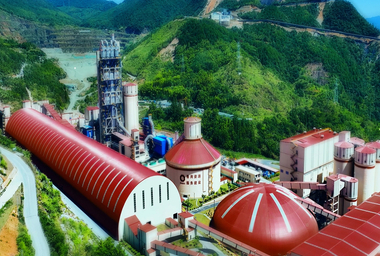
As the world’s third largest source of industrial carbon emission, the cement industry faces an arduous task of carbon emission reduction. This paper systematically reviews the cutting-edge progress of decarbonization technologies in China’s cement industry.
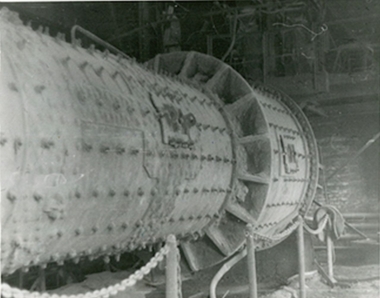
Based on the analysis of classic ball mills of various designs, a grinding concept was developed and, on this basis, a highly efficient new-generation unit was created – the tubular-conical mill (TCM). One of the advantages of TCM is the possibility of combining the simplest closed circuit of cement grinding with minimal capital and operating costs.
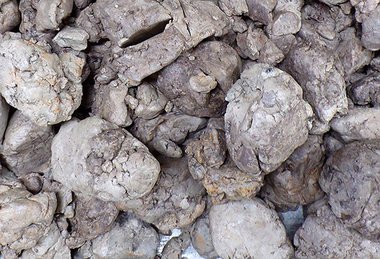
Gebr. Pfeiffer has received an order to supply an MVR 3070 R-2 vertical roller mill for clay grinding. The mill will be installed at the cement plant of Ciments de Côte d‘Ivoire (CIMCI) in Ivory Coast, where it will grind clay for the production of cements with calcined clay.
In response to an open letter from an ETS alliance of almost 80 companies to EU Commission President Ursula von der Leyen and German Chancellor Friedrich Merz, Philip Nuyken, Managing Director of Policy at the German Lime Association (BVK), is calling for more realpolitik.
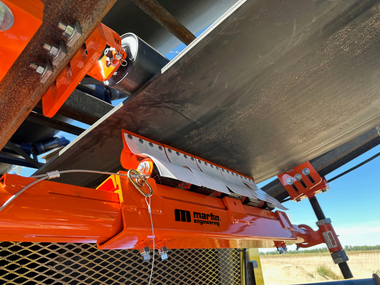
The ongoing battle against dust in bulk material handling is a continuous challenge. The location and number of belt cleaners required, based on production volume and application on a conveyor system, are closely tied to safety, emissions, and operating costs. A common design challenge is positioning belt cleaners in the optimal locations.
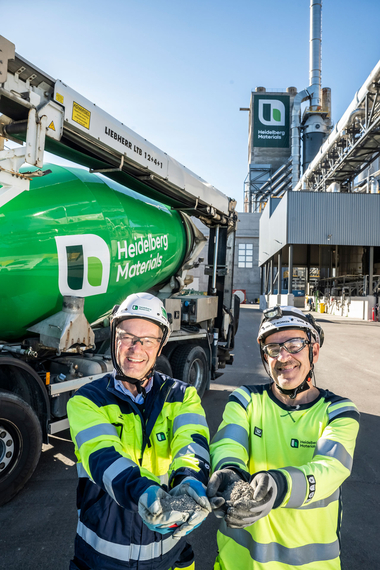
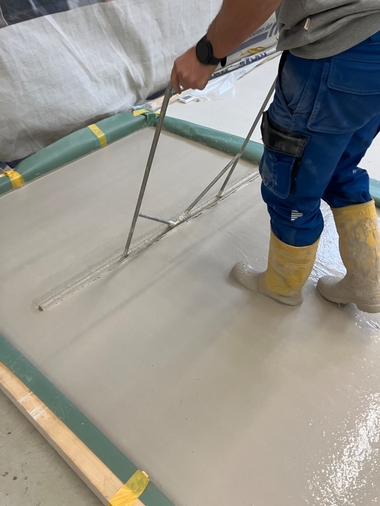
Heidelberg Materials has started delivering evoZero, the world’s first near-zero carbon captured cement, to customers across Europe. Based on carbon capture and storage (CCS) at Heidelberg Materials. Furthermore, evoZero supports the construction of the new Skøyen Station in Oslo/Norway and the German 3D-printing project DREIHAUS.
With the foreseeable end of coal-fired power generation, a key raw material for calcium sulfate binders, flue gas desulfurization gypsum (FGD gypsum), will no longer be available. In order to avoid having to fill the resulting gap exclusively with natural gypsum, gypsum recycling will play a significantly greater role in the future.
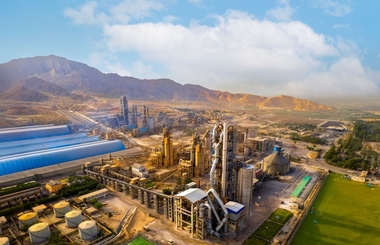
Pakistan’s cement industry recovered in FY 2025 from the downturn in the last three years. However, the industry is fragmented and divided into North and South. This market review will provide the latest production data, the main players in the market and their production shares.
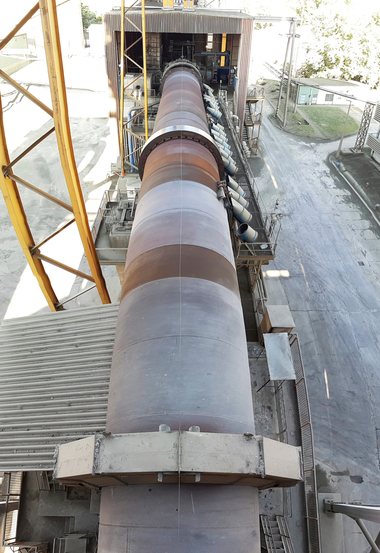
Rotary kilns are essential for cement production – as is the case at the Duna-Dráva Cement plant in Vác, northern Hungary, which belongs to the Heidelberg Materials Group. After a roller bearing on the kiln failed, the existing gear ring was severely damaged and had to be replaced.